Destinations
Issyk-Kul, with enough time to understand the place.
The lake I grew up on, with two very different shores.
- Season
- June—September for swimming; shore visits year-round
- Base
- Cholpon-Ata or Bokonbaevo
- Pace
- 2—4 days
Go for the place—not only the landmark.
The strongest visit leaves room for local conditions, short walks and the road itself.
- Use one practical base instead of changing hotels every night.
- Match outdoor plans to the season before fixing transfers.
- Leave margin for mountain roads, weather and unplanned stops.
Build a route that still feels like a journey.
Pair nearby places before adding another distant region.
Karakol
A sensible companion when dates and road conditions allow.
Bokonbaevo & south shore
A sensible companion when dates and road conditions allow.
Altyn Arashan
A sensible companion when dates and road conditions allow.
What to decide before you go
Access
Mountain roads take longer than the map suggests; confirm the current approach.
Stay
Choose the base around the next day's activity, not only the best-known town.
Conditions
Weather, road work and seasonal camps can change the final plan.
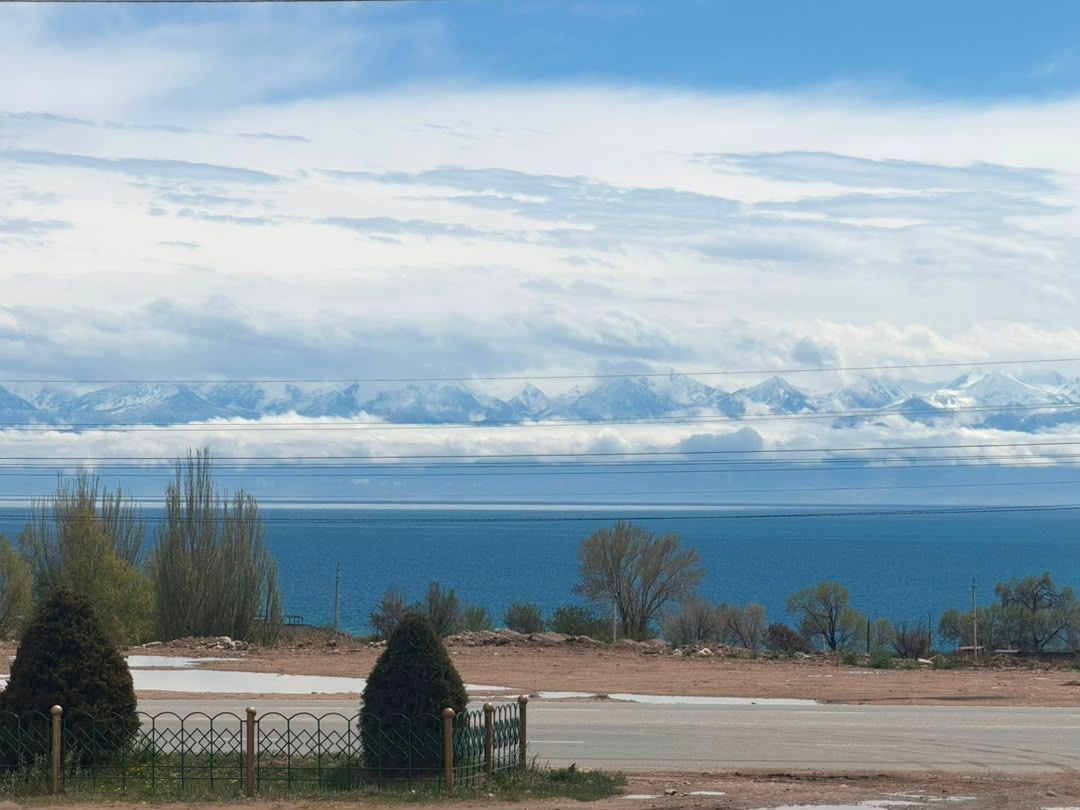
I grew up on the shore of this lake, and after fifteen years of guiding I still think it is the best first introduction to Kyrgyzstan. Issyk-Kul is a huge, slightly salty mountain lake that never freezes, held in a valley between two snowcapped ranges — and it is really two destinations in one. The north shore and the south shore are different worlds, and which one you choose will shape your trip more than almost any other decision you make here. This page is my honest map of both.
What is Issyk-Kul?
Issyk-Kul is the world’s second-largest mountain lake after Titicaca — a body of water so big that locals simply call it “the sea.” It sits at about 1,607 m above sea level in the northeast of Kyrgyzstan, stretches roughly 180 km from end to end, and is the geographic heart of most first trips to the country. The whole Issyk-Kul basin is designated a UNESCO Biosphere Reserve.
The numbers, for those who like them:
- Elevation: ~1,607 m above sea level
- Surface area: 6,236 km² — about 177–182 km long and up to 60 km wide, with ~597 km of shoreline
- Depth: up to ~670 m
- Salinity: ~0.6 % — salty enough to float a little easier, fresh enough that it doesn’t sting
- Hydrology: more than a hundred rivers and streams flow in; none flow out, which is why minerals accumulate and the water is faintly salty
- Ranking: second-largest high-mountain lake in the world after Titicaca, and second-largest saline lake after the Caspian Sea
Why is it called the “warm lake” — does Issyk-Kul ever freeze?
“Issyk-Kul” means “warm lake” in Kyrgyz, and the name is literal: the main body of the lake never freezes over, even when winter air temperatures drop to −20 °C. Three things keep it open — the slight salinity, the sheer depth and thermal mass of the water, and geothermal springs on the lakebed. One honest caveat: the shallow Tyup and Rybachy bays at the eastern and western ends can skin over with ice at the edges in a hard winter. The open lake itself stays liquid year-round, which is why you will see water birds on it in January with snow on the beach behind them.
Can you swim in Issyk-Kul, and when?
Yes — the swim season runs from June to September, peaking in July and August. Set your expectations honestly, though: this is a mountain lake, and the water is refreshing rather than warm. At the beaches in high summer the surface water sits around 20–22 °C (some travel sources report up to 24 °C in a hot spell), while the open central lake is colder — academic measurements put the summer surface of the deep water nearer 18 °C. The shallows where you actually swim are always the warmest. In May the water is only 14–16 °C, which is for the hardiest swimmers; air temperatures at the shore reach +30 °C in peak season, so the contrast is part of the pleasure. For a month-by-month picture of swim season against trekking and ski seasons, see when to go.
North shore or south shore — which side is right for you?
Short answer: the north shore is the developed resort side — sanatoria, hotels, boat trips and nightlife, closest to Bishkek, with the lake’s best sandy beaches around Cholpon-Ata. The south shore is quieter and more village-based — yurt camps, eagle hunters, canyons and gorge trailheads, with the Terskey Ala-Too mountains rising steeply behind the beach. Neither is “better”; they suit different travelers. Many people do both in one loop.
| North shore | South shore | |
|---|---|---|
| Development | Resort strip: Soviet-era sanatoria, hotels, guesthouses, restaurants | Villages, family guesthouses, yurt camps on the shore |
| Who visits | Mostly Kyrgyz, Kazakh and Russian holidaymakers; busy mid-summer | Independent travelers, trekkers, culture-focused visitors |
| Beaches | Best sand on the lake around Cholpon-Ata and Bosteri; least wind on this middle stretch | Pebbly in places, but Tosor has powdery sand and far fewer people |
| Activities | Swimming, boat trips, jet-skis, nightlife, petroglyphs, gorge day trips | Eagle-hunting demonstrations, canyons (Skazka), hot springs, trailheads into the Terskey Ala-Too |
| Suits | Families and anyone wanting an easy beach holiday with amenities | Travelers pairing lake days with culture and mountains; slow travel |
Still unsure which side fits you? Tell me your dates and who you’re traveling with on WhatsApp and I’ll say honestly which I’d pick — I know both shores because I grew up between them.
What’s on the north shore?
Cholpon-Ata is the north shore’s main resort town, about 4 hours from Bishkek, and it is more than a beach strip. Above the town lies a 42-hectare open-air “stone garden” of glacial boulders carved with petroglyphs — the oldest date to the late Bronze Age, around 1500 BCE, with most belonging to the Saka-Usun period (8th century BCE to 1st century CE) and later Turkic additions. Long-horned ibex, deer, horses and hunting scenes dominate; near the entrance is a famous panel showing ibex hunted with tame snow leopards. Please look but don’t climb on the carved stones — too many visitors do. On the waterfront, the Ruh Ordo cultural complex gathers chapels of five world religions, ethnographic exhibits and a lakefront amphitheatre; the name means “Center of Spirituality.” The town itself grew around Soviet resort development and a famous horse farm founded in the 1920s — a fitting origin for a place in horse country. With a base in Cholpon-Ata or neighboring Bosteri, the standard day trips are the twin gorges of Grigorievka and Semenovka in the Kungey Ala-Too — swim one day, walk a gorge the next.
What’s on the south shore?
The south shore is my home turf, and it rewards travelers who like their lake days mixed with other things. Bokonbaevo is the service town and the recognized center for eagle-hunting demonstrations; Skazka (“Fairytale”) Canyon erodes into red and yellow shapes a short drive from the shore; Tosor has the south’s best sandy beach with yurt camps behind it; and the Terskey Ala-Too trailheads — Barskoon, Juuku, Jeti-Oguz further east — start almost at the water’s edge. The full south-shore guide lives on the Bokonbaevo page. And if you can’t decide between shores, don’t: the loop around the lake combining both is one of the best week-long trips in the country — see how it fits into 7, 10 or 14 days.
Where should I base myself around the lake?
For the lake itself, base on one of the shores above. For everything around the lake — trekking, markets, hot springs, winter snow — four bases matter, and each has its own page. Here’s the short version.
Karakol — trekking base and market town
Karakol, the east-shore base, is the main jumping-off point for the eastern Tien Shan — but be clear-eyed: it is a mountain base, not a beach town, sitting 15 km from the shore. You come here for the Sunday animal market, the Dungan mosque and wooden cathedral, a plate of ashlyan-fu, and marshrutkas fanning out to the trailheads of Karakol gorge, Ak-Suu and Jeti-Oguz.
Jyrgalan — two seasons in one valley
Jyrgalan lies about 60 km east of Karakol, roughly an hour by road, at 2,250 m. A former coal-mining village that rebuilt itself around community tourism, it works in two seasons: trekking, horse riding and waterfall walks in summer, and lift-free freeride skiing in winter — locally regarded as the snowiest corner of the region.
Bokonbaevo — eagle hunters and the quiet shore
Bokonbaevo is the south shore’s hub: the berkutchi (eagle hunters) who give demonstrations year-round, the yurt-makers of Kyzyl-Tuu village, felt-craft workshops, and the calmest stretch of lakeshore on the lake.
Altyn Arashan and the Ala-Kul trek
Altyn Arashan — “Golden Spring” — is a hot-springs valley at about 2,600 m, reached by a 14–15 km hike from Ak-Suu village near Karakol or by a serious 4WD track. It is also the classic finish of the 3–4 day Ala-Kul trek, and soaking in the springs after the ~3,860 m pass is one of the great rewards of trekking here.
How do I get to Issyk-Kul from Bishkek?
All routes start in Bishkek and cross the Boom gorge to the lake’s west end at Balykchy, then split north or south along the shore. Marshrutkas (shared minivans) are the budget backbone and leave when full rather than on a fixed timetable; GoBus coaches and shared taxis fill the gaps; a summer-only train runs to Balykchy. I don’t list fares here because they drift year to year — check the current figure at the bus station, or ask me before you travel.
| Base | Distance / time | Marshrutka | Other options |
|---|---|---|---|
| Cholpon-Ata (north shore) | ~265 km, ~4 h | Direct, leaves when full | Shared taxi ~3.5 h |
| Karakol (east) | ~400 km, 6–7 h | Direct, leaves when full | GoBus coach ~6 h; private car ~5.5 h |
| Bokonbaevo (south shore) | about 4–5 h by car, 5–6 h by marshrutka (sources disagree on the exact distance) | Any south-shore Karakol marshrutka can drop you there | — |
| Balykchy (west end) | ~5 h by summer train | — | Seasonal train, then onward marshrutka to either shore |
One practical note: entry rules differ by nationality, so check visa and entry requirements separately — that page is kept current. And if you’d rather skip the marshrutka puzzle entirely, I arrange door-to-door transfers from Bishkek or the airport to any point on the lake — ask me on WhatsApp and I’ll quote you honestly for your dates.
What is there to do beyond the beach?
The beach is half the story. On the south shore you can watch a berkutchi work a golden eagle — I write about the tradition, and the hunters I know, in the eagle-hunting journal, and demonstrations are part of our cultural and Silk Road tours. You can ride horses along the shore and up to the jailoo pastures, trek from the lake’s edge into the Terskey Ala-Too on a guided trekking trip, or keep it gentle with the lake-and-valley rhythm of our eco tours. The lake rewards slowness: a swim in the morning, a gorge in the afternoon, dinner in a village.
What is Issyk-Kul like in winter?
Quiet, and underrated. The lake itself doesn’t freeze, so the shore in January is a strange and beautiful place — open water, drifting birds, snow on the sand. Swimming is out, but the region’s winter life moves uphill: the ski season at Karakol and Jyrgalan runs roughly from late December to March, and our winter ski touring page covers what guided backcountry days look like. Be honest with yourself about the shoulder months, though — May and October–November are poor for both the beach and high trekking. One more winter-and-summer note: the World Nomad Games were born on this shore, with the first edition held at Cholpon-Ata in 2014. The 2026 Games are scheduled for 31 August–6 September 2026, with the opening in Bishkek and the main competitions announced for Cholpon-Ata and the Kyrchyn jailoo on the north shore — venues were correct at the time of writing, but recheck before planning around them. Our World Nomad Games guide tracks what’s confirmed.
People ask me why I still live here when I could guide anywhere. The honest answer is that this lake raised me — I learned to swim in it, walked its shores in every season, and I still stop the car on the Boom gorge road just to look at it with guests seeing it for the first time. Whichever shore you choose, come with a few unhurried days and let the lake set the pace.
Message us on WhatsApp (opens in new tab)
Contact
Want to see this place with someone who knows the road in? Message Kylych on WhatsApp with your dates and group size, or send the inquiry form — you will hear back with an honest plan, not a package pitch.