
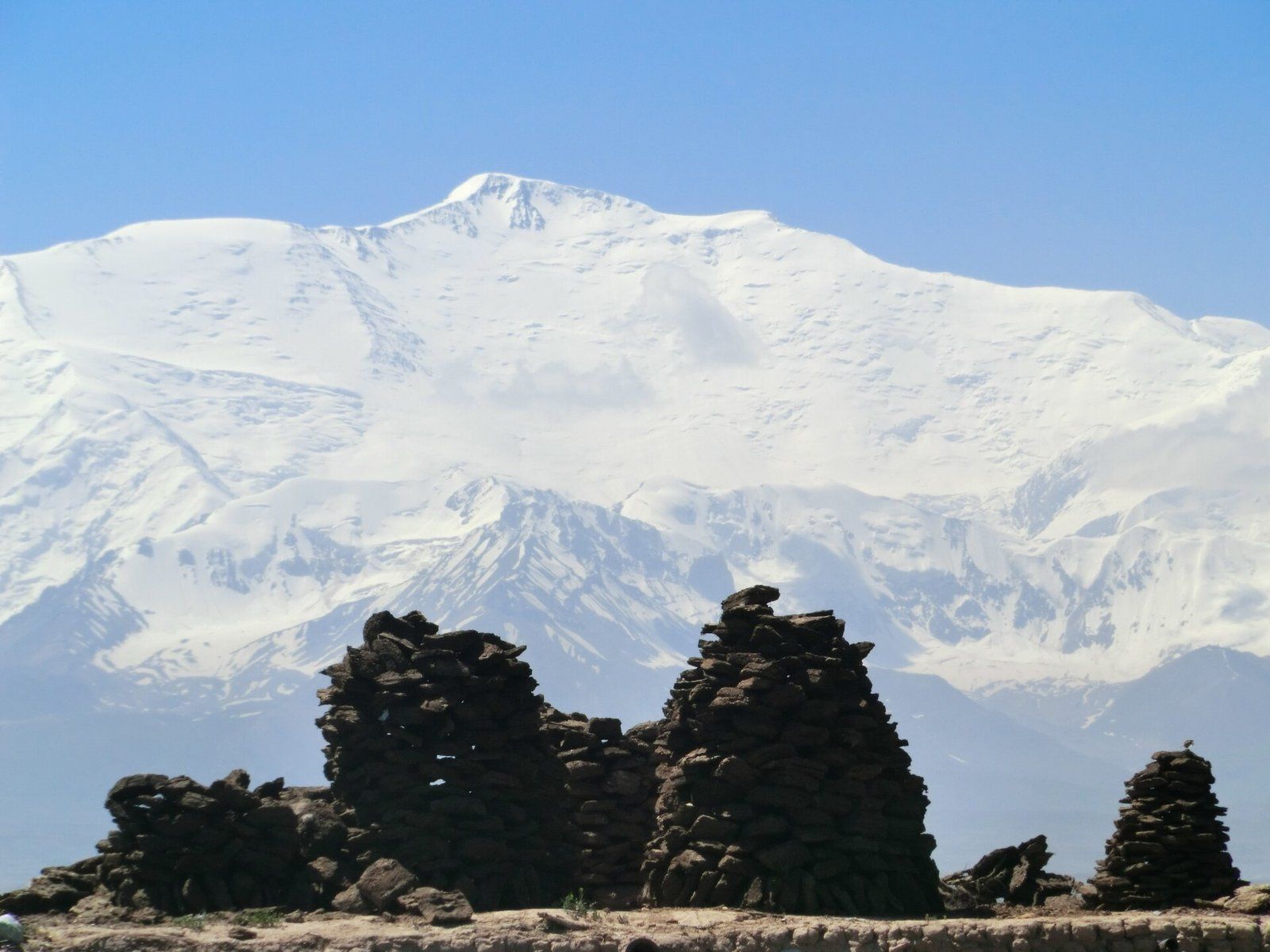
Adventure trekking
Walk the high Tien Shan at a pace you can sustain.
From strong day hikes to multi-day mountain crossings, the route is built around your fitness, acclimatization and the conditions on the trail.
Photo by Nihongarden on CC BY-SA 3.0

- Fitness
- Moderate—challenging
- Season
- July—early September
- Duration
- 3—8 days
- Region
- Karakol, Altyn Arashan, Jyrgalan
A real mountain journey, not a photo stop.
Expect long days, uneven ground and simple mountain stays. Lower routes can work earlier; high passes need a reliable summer window.
Good for
- Regular hikers comfortable with full days outside
- Travelers who value the route more than hotel comfort
- Private groups wanting a pace matched to them
Not for
- Travelers with no time to acclimatize
- Anyone needing guaranteed access to a specific high pass
Choose the level before the landmark.
Conditions decide the final line. These are starting points, not fixed departures.
Jyrgalan day hikes
Valley and ridge walks from a village base, with flexible distances and easier logistics.
Ak-Suu & Altyn Arashan
Forested valleys, hot springs and multi-day options from the Karakol side.
Ala-Kul crossing
A demanding high-pass route for prepared hikers in the stable summer window.
What to expect
Fitness
Share recent hiking experience honestly; distance alone does not show altitude or terrain.
Equipment
Your packing list depends on the route, overnight style and forecast.
Route changes
Snow, river levels and weather may require a lower or shorter alternative.
I have been walking the Terskey Ala-Too — the range that rises straight off the southern shore of Issyk-Kul — since I was a boy, and guiding trekkers through it for more than fifteen years. The routes on this page are the ones I know stone by stone: the Ala-Kul trek from our base town of Karakol, the valley trails around Jyrgalan, and the week-long Ak-Suu traverse that strings them together. Every trek I run is supported: pack horses carry the camp, beds in yurt camps and guesthouses are booked ahead, and you walk with a daypack, not a 20-kilo rucksack.
Why trek the Tien Shan with a guide?
A guide is not legally required on these trails, and experienced, self-sufficient hikers do walk them independently — but outside Jyrgalan the trails are unmarked and often hard to follow, the weather turns fast at 3,500 m, and solo hikers have died in these mountains. That is not sales talk; it is the reason local trekking culture runs on check-ins. The community tourism (CBT) offices in Karakol and Jyrgalan advise on trail conditions and weather, and they can raise help if an independent hiker doesn’t return by a stated date. When you walk with me, that safety net is simply built in: someone always knows where my group is, and I make the go/no-go calls on pass days.
The navigation apps help — all of these trails are on Maps.me and work offline — but a line on a screen doesn’t tell you which side of a gully the scree sits stable on, or whether the cloud building over the ridge means hail in an hour. Locals here say you get four seasons in one day, and in July at the pass they are not joking.
Which treks do we guide?
What is the Ala-Kul trek like?
Ala-Kul is the signature Tien Shan trek: 3–4 days and 40–50 km from the Karakol valley over a high pass to a turquoise alpine lake at ~3,532 m, finishing in the hot-springs valley of Altyn Arashan. The pass is usually quoted at ~3,860 m, though published sources vary between 3,860 and 3,960 m — I’d rather give you the honest range than a confident wrong number. It is moderate-to-challenging walking: no technical climbing, but long days, steep scree near the pass, and real altitude. I recommend the 4-day pacing, which splits the approach and gives you a night at ~2,900 m before the crossing. The reward at the end is a soak in the Altyn Arashan springs and a proper guesthouse bed. Route detail, month-by-month pass conditions and the yurt-versus-tent question live in the full Ala-Kul trek guide — this page is about walking it with me.
What can you trek from Jyrgalan?
The Jyrgalan valley, about 60 km east of Karakol, is a former mining village that has rebuilt itself as a year-round outdoor destination — and it is the one area where trails are deliberately marked and mapped for independent walkers. From the village I guide everything from half-day walks to multi-day loops: the Kok Bel waterfall trail (~6 km, best after rain or in late spring), the gentle Turnaly Kol loop (~10 km, a good first day at altitude), and the Keskenkiya Loop, a 53 km circuit of the surrounding valleys over 3–4 days with a river crossing and side trips to small lakes. An extended ~92 km version approaches the Kazakhstan border and needs permits — I confirm the route details and current permit requirements with Destination Jyrgalan when we plan your trek. Boz Uchuk Lakes, the valley’s signature multi-day route with full Terskey Ala-Too panoramas, is where I take trekkers who want the high country without the Ala-Kul crowds.
What is the Ak-Suu Traverse?
The Ak-Suu Traverse is the expedition tier: roughly 100+ km and about 45 walking hours over ~7 days, from Jyrgalan past the Boz Uchuk and Ala-Kul lakes to the Kok Jaiyk yurt camps above Jeti-Oguz. It runs July to September and links nearly everything on this page into one continuous line through the range. If you have a week, strong legs, and want the Tien Shan rather than a highlight of it, this is the trek we should talk about. We also guide in the western Tien Shan — Sary-Chelek country — for travelers combining regions on a longer trip.
What does “supported trekking” mean?
Supported trekking means the logistics ride on horses and bookings, not on your back. Independent trekkers in the Karakol mountains generally need their own camping gear — there are few yurt camps in the backcountry — and either carry it or rent it in advance from Destination Karakol or Destination Jyrgalan. On my treks, pack horses carry the camp and kitchen, yurt and guesthouse beds are reserved before we set out, and meals on trek days are cooked for you. You carry water, a layer, a camera.
| Independent | Supported with a guide | |
|---|---|---|
| Pack weight | Full camping gear, food, stove | Daypack only |
| Accommodation | Your own tent; few backcountry yurt camps | Pre-booked yurt camps and guesthouses |
| Meals | You shop, carry and cook | Cooked for you on trek days |
| Navigation & safety | Maps.me, self-reliance, CBT check-in | Guide route-finds and makes weather calls |
| Logistics | Marshrutkas, park gate, gear rental | Handled, including high-season bed bookings |
| Suits | Experienced, self-sufficient hikers | Anyone who’d rather walk than administer |
Sample itinerary — what does a 4-day Ala-Kul trek look like?
The day-by-day program at the bottom of this page shows how I typically pace the classic four-day Ala-Kul trek: a short first day up the Karakol valley, a night at the ~2,900 m yurt camp, the pass day down to the Altyn Arashan hot springs, and the walk-out to Ak-Suu village. Treat it as a starting point, not a fixed product — every program is tailored on inquiry to your dates, fitness and the season’s conditions.
When is trekking season in the Tien Shan?
The high routes — Ala-Kul, the traverse, the bigger Jyrgalan loops — run from late June to mid-September. Snow patches can linger near the pass even in summer, and outside that window the passes are simply not a trekking proposition: May and October are possible only below ~2,500 m, with snowfall a real risk, and winter in these mountains is ski season, not hiking season. For a month-by-month picture of every activity, see when to go.
How hard is it, and how fit do you need to be?
None of the routes on this page involves technical climbing — no ropes, no glacier work — but “non-technical” does not mean easy. Grading honestly: the Jyrgalan day walks are gentle and suit anyone who can walk a few hours; the Keskenkiya Loop is moderate, with a river crossing; Ala-Kul is moderate-to-challenging — the pass day means roughly 1,000 m up and 1,400 m down on steep ground, at altitude, where summer hail or snow is possible; the Ak-Suu Traverse is challenging, and I will ask you honestly about your experience before we commit to it. If you are comfortable walking 5–7 hours a day with breaks and you don’t mind basic mountain accommodation, you are fit enough for the 4-day Ala-Kul. Altitude affects people unpredictably — the acclimatization pacing on my 4-day program exists precisely because fitness is no protection against it.
What does a guided trek cost in Kyrgyzstan?
I don’t publish a fixed price list, because the honest answer depends on your dates, group size and route — write to me and I’ll quote for the current season. What I can tell you is what moves the number: group size first of all, since several trekkers share one guide’s day-rate, then private versus shared departures, and how much support you want on the trail. Walking these routes independently is genuinely cheap — marshrutkas, the park permit, yurt-camp nights and guesthouse beds add up slowly — and the gap between that and a guided trek is exactly what the table above describes: guidance, horses, booked beds and cooked meals. Tell me your dates and group size — via the contact page or WhatsApp — and I’ll tell you what your trek would actually cost this season.
What should you pack?
Less than you think, because the horses carry the rest — but the layers you do carry matter. Even in July and August you need a proper waterproof shell and warm layers: four seasons in one day is the rule, and the pass can serve you sun, wind and hail inside an hour. Broken-in boots with ankle support earn their keep on the scree. Everything else — sleeping gear, kitchen, food — is on our side of the ledger, and I’ll send you a full packing list matched to your route and month when we plan your trek.
Planning notes: if you’re still shaping the bigger trip, my 7, 10 and 14-day Kyrgyzstan itinerary shows how a trek fits into a route, and I quote current trip costs on inquiry for wider budgeting.
Ready to walk? Send me your dates, group size and which of these routes caught your eye — through the contact form or straight to my WhatsApp — and I’ll come back with a program and a quote for the current season.
Plan this trip — send your dates
I read every inquiry myself and reply with questions, then a draft program.
Thank you — we will reply soon.
You can also say hello on WhatsApp — it's often the fastest way to reach me.