Destinations
Altyn Arashan, with enough time to understand the place.
Hot springs and the classic Ala-Kul trekking route.
- Season
- June—early September
- Base
- Ak-Suu / Karakol
- Pace
- 1—3 days
Go for the place—not only the landmark.
The strongest visit leaves room for local conditions, short walks and the road itself.
- Use one practical base instead of changing hotels every night.
- Match outdoor plans to the season before fixing transfers.
- Leave margin for mountain roads, weather and unplanned stops.
Build a route that still feels like a journey.
Pair nearby places before adding another distant region.
Karakol
A sensible companion when dates and road conditions allow.
Jyrgalan
A sensible companion when dates and road conditions allow.
Issyk-Kul
A sensible companion when dates and road conditions allow.
What to decide before you go
Access
Mountain roads take longer than the map suggests; confirm the current approach.
Stay
Choose the base around the next day's activity, not only the best-known town.
Conditions
Weather, road work and seasonal camps can change the final plan.
Altyn Arashan — the name means “Golden Spa” — is a hot-springs valley in the mountains east of Karakol, and it sits at the end of the most famous trek in the eastern Tien Shan. Most people arrive here one of two ways: on foot over the Ala-Kul pass, or by hiking, riding, or rattling up the valley in an old Soviet 4x4. This page covers both honestly — the valley itself, with its springs, yurt camps and simple guesthouses, and the classic Ala-Kul trek that finishes with a soak in them.
What is Altyn Arashan?
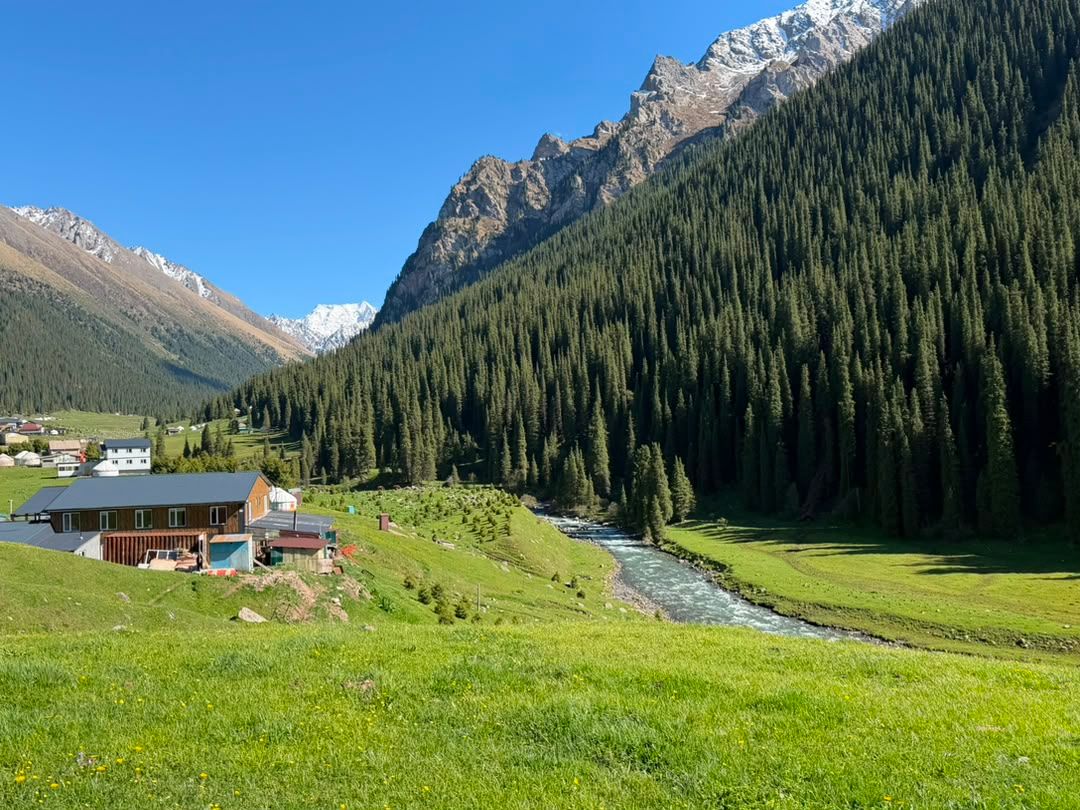
Altyn Arashan is a hot-springs valley at roughly 2,600 m (published sources put it between 2,500 and 2,600 m) in the Terskey Ala-Too range east of Karakol. The valley begins at Teploklyuchenka village — usually called Ak-Suu — about 12 km east of town, and from there the track follows the Arashan River up through a narrow, forested gorge. Three groups of warm sulfur and radon springs surface beside the river, and above everything stands Palatka Peak (4,260 m), whose steep pyramid fills the view from most of the valley.
I grew up in the Issyk-Kul region and these mountains are my home ground, so let me set expectations the way I would for a friend: Altyn Arashan is not a resort. It is a working mountain valley with bath huts, yurts and a handful of rustic guesthouses, an unreliable phone signal and some of the finest walking in Kyrgyzstan on its doorstep. That combination is exactly why people love it.
What is the Ala-Kul trek and why is it the signature Karakol trek?
The Ala-Kul trek is a 3–4 day traverse that starts in the Karakol valley, climbs to Ala-Kul lake (~3,532 m), crosses the Ala-Kul pass, and descends into Altyn Arashan before finishing at Ak-Suu village. Most detailed accounts put the total distance at 40–50 km; one records 55 km over three days — so plan for roughly 40–55 km depending on pacing. It earns its “signature” status honestly: in a single short route you get a forested valley, a high alpine lake, a serious pass, and hot springs at the end. Two days up through the Karakol valley, two days down via Altyn Arashan, and a soak as your reward.
How many days do you need — 2, 3 or 4?
Four days is my recommendation for most hikers, because it splits the approach and gives your body time to adjust to the altitude before the pass day. The standard 3-day profile — used by fit, already-acclimatized hikers — runs like this: Day 1, Karakol National Park gate to the “second camp” area (2,900 m), about 19 km. Day 2, the big one: roughly 15 km with about 1,000 m of ascent over the pass and 1,400 m of descent to Altyn Arashan. Day 3, 15–18 km, mostly downhill, out to Ak-Suu village. A 2-day version exists, but it is only realistic with a pre-arranged 4x4 meeting you in Altyn Arashan — and I would not choose it as your introduction to these mountains.
These are the standard published route profiles. Anything I organize for you is a sample itinerary — the final program is tailored on inquiry to your dates, fitness and the conditions that week.
How hard is the Ala-Kul trek?
Moderate to challenging. There is no technical climbing anywhere on the route, but the days are long, the final approach to the pass is steep scree, the altitude is real, and the weather at the top changes fast — hail or snow at the pass is possible even in mid-summer.
Do you need a guide? Strictly speaking, no — experienced, well-prepared hikers walk it independently every season, and the whole route is on Maps.me, which works offline. But I will be straight with you: the path on the descent side is unclear at some points, and solo hikers have died in the wider Karakol mountains. If you go independently, leave your plan and return date with someone — the CBT office in Karakol can advise on trail conditions and raise help if a hiker does not come back on time. If you are not confident reading terrain or navigating in fog, walk it with a guide.
If you want the same mountains with deliberately marked and mapped trails, look at the marked trails in the Jyrgalan valley an hour east of Karakol — a quieter alternative and a good first multi-day trek.
What are the pass conditions by month?
The reliable pass window is early July to mid-September. Some sources stretch the season to June–September, but snow patches can linger near the pass even in high summer, and outside the core window the crossing is a different, riskier undertaking. My month-by-month read:
| Month | Pass state | Crowding | Advice |
|---|---|---|---|
| June | Snow often still lies near the pass; crossing unreliable early in the month | Low | Stay below ~2,500 m unless you have current local information |
| Early July–mid-September | The dependable window; old snow patches possible even in August | Highest in July–August | Book yurt places ahead; start pass days early in the morning |
| Late September–October | Fresh snow risk returns; the high route is effectively over | Low | Shoulder-season hiking below ~2,500 m only |
| November–May | Snow-blocked; winter temperatures down to −20 °C | None | No hiking — experienced ski tourers only |
For the bigger picture of which month fits which activity across Kyrgyzstan, see best month for each activity.
How high is the Ala-Kul pass?
About 3,860 m — sources vary between 3,860 and 3,960 m, and Russian-language sources commonly round it to ~3,900 m. I publish the range rather than a single figure because the maps genuinely disagree. Plan your acclimatization for the higher end and you will not be caught out: sleep at 2,900 m before the pass day, drink more than you think you need, and turn back if a headache turns nasty.
Yurt or tent — where do you sleep on the route?
A mix of all three options, which is part of the route’s appeal. Camping is possible along the whole traverse; there is a seasonal yurt camp around the “second camp” area at ~2,900 m; and Altyn Arashan itself has yurt camps and simple guesthouses. A tent is not strictly required on the standard 3-day route in season — but yurt places fill fast in July and August, so book ahead through Karakol hostels or Destination Karakol rather than hoping on the day.
One caution if you are planning a longer independent trek beyond this route: there are few yurt camps in the wider Karakol backcountry, so multi-day trekkers generally need their own camping gear, which can be rented in Karakol — check availability in advance. Whatever the month, pack for “four seasons in one day”: waterproofs and a warm layer even in July.
For an honest sense of the independent budget: a full independent 3-day Ala-Kul trek — marshrutkas, park fee, a yurt night with dinner and breakfast, a guesthouse night, meals and the hot springs — costs less than most travelers expect, but I don’t publish figures because prices here drift every season. Ask me when you inquire and I’ll give you the current picture.
How do I get to Altyn Arashan?
Three ways up the valley from Karakol, the trekking base town — and they are genuinely different experiences:
| Way | Distance / time | Effort | Cost | Honest notes |
|---|---|---|---|---|
| Hike | ~15 km one way from Ak-Suu, 4–6 h | Moderate | Free | Follows the Arashan River the whole way; a taxi to the “First Bridge” skips the dusty road section |
| 4x4 | ~12 km of very rough track, 2+ hours | None physical | On inquiry — per vehicle, rates change by season | Serious 4WD only — GAZ-66 or UAZ trucks; most Karakol rental companies forbid self-drive; the road can be blocked by rocks or landslides; no taxis wait in the valley, so your return must be pre-arranged |
| Horse | Hired in Karakol or at the valley entrance | A full day in the saddle | On inquiry — rates change by season | See the welfare note below |
For the trek itself, marshrutka #101 runs from Karakol to the park gate, and #350 connects Karakol with Ak-Suu village.
A word on riding up: horses work hard in this valley, and in high season some are used on every rotation without enough rest. If you ride, look at your horse before you set off — a reputable owner will not mind. When I arrange horses I use owners I know personally, and I would rather you ask an awkward question at the start than discover a tired horse halfway up.
That “no taxis wait in the valley” point is where most independent travelers get caught. If you want a proper 4x4 with a driver who knows the track waiting for you on the right day, message me on WhatsApp — the green button at the bottom of this page reaches me directly — or send your dates through the contact form and I will have the transport sorted before you leave Karakol.
Can I visit Altyn Arashan without crossing the pass?
Yes — and for many travelers this is the better plan. Altyn Arashan works perfectly as a standalone two-day overnight from Karakol: hike, ride or drive up on day one, soak in the springs, sleep in a yurt or guesthouse, and come back down on day two. No high pass, no heavy pack, no 3,800 m+ altitude. If the full trek sounds like more than you want but the springs appeal, this is your version — and it pairs naturally with a few days in Karakol itself.
What is it really like to stay in Altyn Arashan?
Expect simple, and you will be happy. Accommodation is yurt camps and basic guesthouses, charged per person per night with dinner and breakfast included — the rates shift every season, so I don’t publish figures; ask me and I’ll give you the current range for your dates. Electricity comes from generators or solar panels, mobile signal is spotty at best, and camping is possible anywhere in the valley if you carry your own gear. Facilities are rustic — outside toilets, simple but filling food, thin mattresses in some places. What you get in return is the river, the stars, and the springs a few steps away.
How do the hot springs work?
The springs surface beside the Arashan River and are used in small bath huts — you pay a small fee per session (the figure moves, so expect whatever is current on the day), and guesthouse stays often include one entry. The water is radon-bearing, which is why locals credit it with easing joints and muscles; the sensible rule that goes with that is to limit each soak to 15–20 minutes. Some natural pools exist for free, but you have to hike to find them.
How much does it cost and are there fees?
Budget in three parts. Park entrance: Karakol National Park charges an entrance fee per person, payable at the gate — the figure changes, so recheck it each season or ask me; keep the receipt you are given. Accommodation and food: the per-person half-board rate described above, plus simple meals. Everything together: an independent three-day trek here stays genuinely affordable — the real costs are transport, the park fee, beds and meals — but som prices drift upward most seasons, so treat any figure you find online as dated and ask me for the current picture when you plan.
Guided versions are quoted on inquiry — I do not publish fixed package prices because every group’s program is built separately.
When is the best time to visit?
June to early September for the valley, with July and August the busiest months and the wildflowers at their best; the high pass is realistic only from early July to mid-September. From October to May the road is often blocked by snow, winter temperatures drop to −20 °C, and the valley belongs to experienced ski tourers rather than hikers. The seasonal planning page has the month-by-month matrix: best month for each activity.
How do I plan this trek with a local guide?
A supported trek changes the experience in practical ways: your heavy bag travels by 4x4 or packhorse instead of on your back, your yurt or guesthouse place is secured before you arrive (critical in July and August), the 4x4 is booked to collect you from the valley — the detail that strands most independent hikers — and the pacing is set around acclimatization, not a fixed schedule. You walk with a daypack and your energy goes into the mountains, not the logistics.
If you are sketching a wider trip, see where Ala-Kul fits in a 7–14 day route — it slots naturally into any east-Issyk-Kul block. The trek itself lives on our guided Ala-Kul trek page, and when you are ready, tell me your dates and group size through the contact form or on WhatsApp and I will build the program around them.
Message us on WhatsApp (opens in new tab)
Contact
Want to see this place with someone who knows the road in? Message Kylych on WhatsApp with your dates and group size, or send the inquiry form — you will hear back with an honest plan, not a package pitch.