Field guide
World Nomad Games 2026
Dates, venues, transport and realistic side trips for the event in Bishkek and Issyk-Kul.
Quick answer
The VI World Nomad Games are scheduled for 31 August–6 September 2026. The official program places the opening in Bishkek and major activity in the Issyk-Kul region.
Choose the right base
Bishkek works for the opening and international arrival. Cholpon-Ata and the north shore are closest to major Issyk-Kul programming and are likely to be busiest. Karakol suits a longer east-shore trip, not a daily substitute for Cholpon-Ata.
Book around uncertainty
Reserve north-shore accommodation early, but verify tickets and the final daily program on the official site before buying non-refundable travel.
Add Kyrgyzstan around the Games
Use the week before or after for Karakol, the south shore, Song-Kul or a private mountain route. Two weeks gives both the Games and the country enough room.
Sources
- World Nomad Games — official sitehttps://worldnomadgames.org/en/
- Journal of Nomads — World Nomad Games guidehttps://www.journalofnomads.com/world-nomad-games-kyrgyzstan/
Dates and venues last verified: 25 July 2026, against worldnomadgames.org and visitkyrgyzstan.kg. Event details can still shift — check those two sites again before you book flights.
The World Nomad Games are coming home. The sixth edition returns to Kyrgyzstan this autumn, with the opening in Bishkek and the main competitions on the north shore of Issyk-Kul — the lake I grew up beside. This page is what I tell friends who write to me asking whether they should come: the confirmed dates, how to actually get between the venues, where to stay, and what is worth doing in the days around the games. I will be plain about one thing up front: I do not sell tickets, and nobody needs a ticket-seller to enjoy this week. What follows is logistics and side trips, from someone who drives these roads every season.
What are the World Nomad Games?
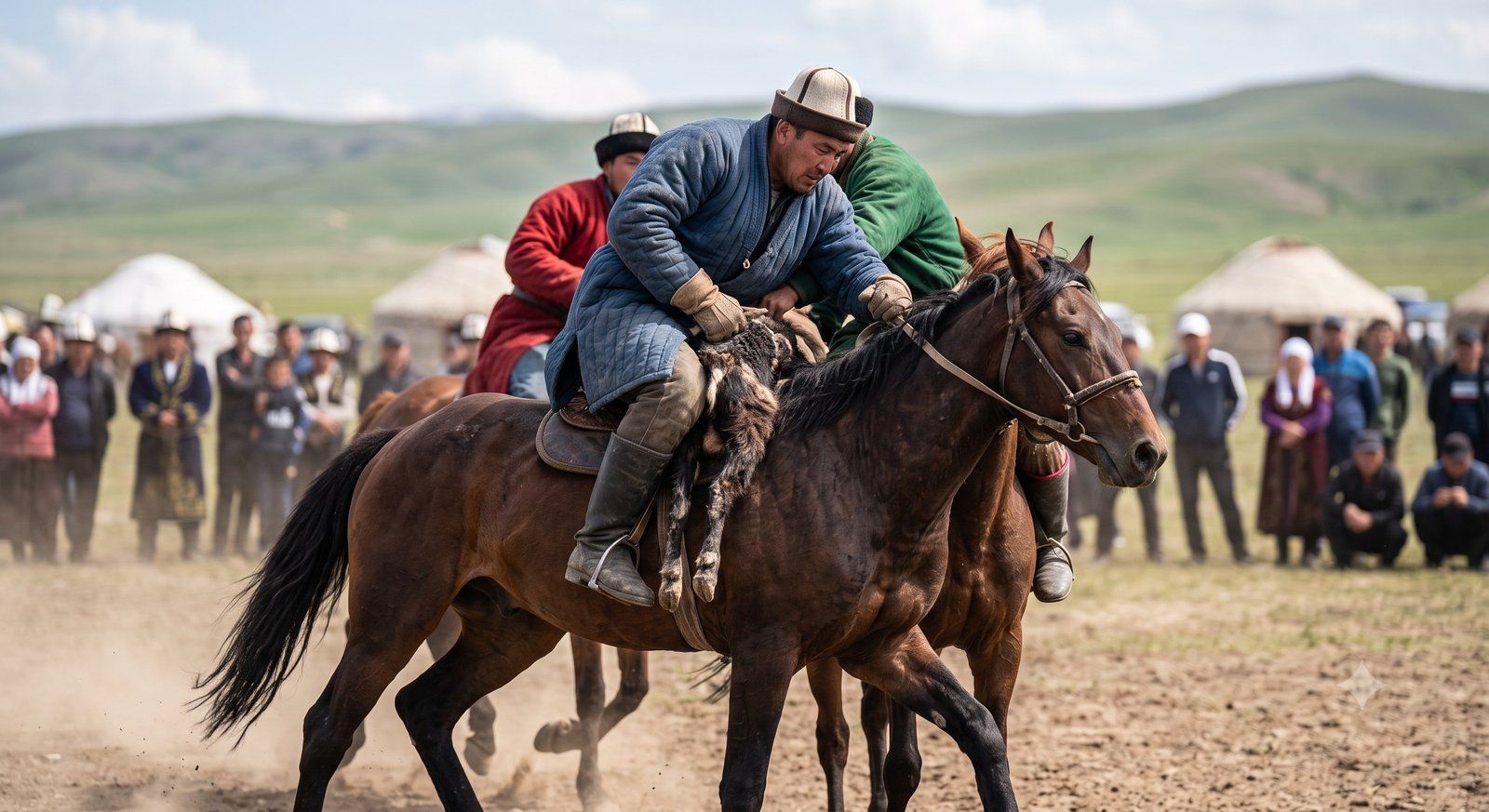
The World Nomad Games are an international festival of nomadic sport and culture, held since 2014 — the first three editions took place in Cholpon-Ata on Issyk-Kul (2014, 2016 and 2018), followed by Iznik in Turkey in 2022, which drew more than 3,000 athletes from over 100 countries across 40 sports, and Kazakhstan in 2024. For the 2026 edition in Kyrgyzstan, the organizers expect participants from more than 100 countries again. Among the disciplines are kok-boru, the fierce horse game played with a goat carcass; salbuurun, the traditional hunting complex of golden eagle, taigan hound and horse; er enish (wrestling on horseback); cirit; horse racing; and intellectual games such as mangala. The full program is published by the organizers on the official games site. For a spectator’s guide to the disciplines: kok-boru, eagle hunting, archery, wrestling, our sister site covers each one.
When and where are the 2026 games?
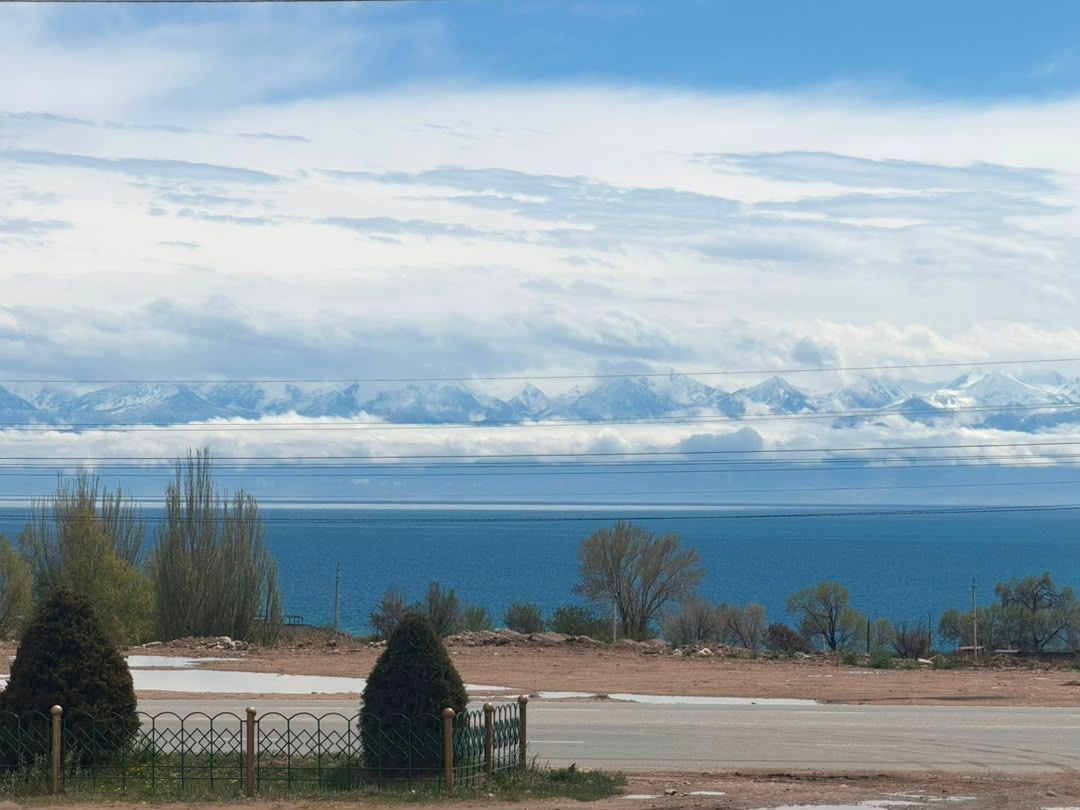
The games run 31 August – 6 September 2026. The opening ceremony takes place in Bishkek on 31 August, at Bishkek Arena. The main competitions follow on 1–6 September at Cholpon-Ata and at Kyrchyn Jailoo — you will also see it written as Kyrchyn Gorge; it is the same wide pasture valley above Cholpon-Ata on Issyk-Kul’s north shore — and the closing ceremony is held on the lakeshore. Alongside the sport, the cultural program includes a yurt village in Kyrchyn Gorge with hundreds of yurts brought from every region of Kyrgyzstan, culinary competitions and yurt-assembly speed contests. If you have never seen the lake, north shore and south shore, the games give you the north shore at its most alive — and the rest of the lake is one good decision away.
How do you get between Bishkek and the venues?
Cholpon-Ata is roughly 250–265 km from Bishkek, about four hours by road. Marshrutkas (shared minibuses) leave from Bishkek’s Western Bus Terminal and take around four hours; shared taxis do it in about three and a half. Both are cheap by any Western measure, leave when full rather than on a fixed timetable, and fares drift year to year — so confirm the current fare at the bus station when you arrive. One honest expectation to set: during games week this road will be busier than any normal September. Leave early, allow extra time, and do not plan a same-day flight out after an evening event. A pre-booked private transfer removes most of that uncertainty.
Where should you stay during the games?
Demand on the north shore will spike during games week — the games have not been held in Kyrgyzstan since 2018, and Cholpon-Ata is a small resort town, so beds will be the scarce resource. Cholpon-Ata and neighbouring Bosteri form the lake’s main resort strip, with hotels, guesthouses and sanatorium-era resorts; yurt camps operate in and around Kyrchyn Gorge in season. Book as early as you can. To be clear about what we do and don’t do: tianshantours.com does not sell games tickets and does not hold hotel blocks. For market context, not as an offer: local and international operators are already selling multi-day games packages, and the popular ones are filling — as of mid-July 2026, one local operator’s 7-day group tour already had most of its spots taken. Package prices vary widely by operator, duration and group size, so compare a few current listings before you commit.
What can Kylych actually do for you during the games?
If you are coming for the games (31 August – 6 September) and want to arrange transport or a side trip, send me a WhatsApp message using the button on this page — mention the games dates and your group size, and I will tell you honestly what is realistic.
Which side trips fit around games week?
Games week falls at the tail of the mountain season, which is exactly what makes the side-trip question interesting. Some options are closing for the year; others are at their best. Here is the honest picture.
Can you still visit Song-Kul?
Barely — and only in the first days of September, with luck. Song-Kul sits at 3,016 m and its yurt camps exist only in summer: one camp publishes its season as 4 June to 28 September, and shepherd families begin moving down from the jailoo from mid-September. The access road over the Kalmak-Ashuu pass (3,446 m) gets unreliable after mid-September and closes with the first serious snow — the authorities closed it for winter from 6 November 2025. So during games week a Song-Kul dash is possible if the weather is kind, but treat it as a bonus, not the plan. I would not promise anyone Song-Kul after about 10 September without checking conditions that week.
What’s on the south shore, 2–3 days?
The south shore is the easy yes. From the games venues, circle the lake and you reach Bokonbaevo, home to the eagle hunters — their demonstrations run year-round, not only in festival season. Nearby are the red rock formations of Skazka Canyon, the Jeti-Oguz valley with its famous red cliffs, the Barskoon gorge and waterfalls, and Kyzyl-Tuu village, where yurt frames are still built by hand. The Terskey Ala-Too mountains rise steeply behind this shore, so trailheads sit close to the lake. Two to three days here fits neatly between or after competition days.
What about Karakol and the hot springs?
Also yes, with one eye on the calendar. Karakol, the east-shore town, is the trekking base for this side of the Tien Shan; on Sundays its animal market runs early in the morning. Above it, the Altyn Arashan hot-springs valley at about 2,600 m is reached by a 15 km hike of four to six hours or a serious Soviet-style 4x4 — and its season runs June to early September, so games week is the tail end. Go in the first week of September and you will likely still catch it open; go mid-month and ask locally first.
A day in the mountains from Bishkek before the opening?
Ala-Archa is the answer — a national park about 40 km south of Bishkek, 45–60 minutes from the city. Entry is inexpensive, a city bus (No. 1, running since summer 2025) goes to the park gate for a small fare, and free shuttles run inside to the trailheads. The riverside trail is gentle enough for jet-lagged legs; the waterfall hike is the fuller day. It is the best one-day warm-up before the opening ceremony.
Can you see eagle hunting at the games — or for real?
Both, and they are different experiences worth understanding. At the games, salbuurun is a competition discipline: eagles are tested on the speed of their response to the hunter’s call and on catching a lure. It is spectacular, and it is a stadium version of the tradition. On the south shore, around Bokonbaevo, you can arrange a private demonstration with a working bürkütchü — an eagle hunter whose bird really hunts foxes and hares in the winter season, roughly October to February. Demonstrations use lures and pelts, never live prey, and the same birds you meet in September hunt in earnest a few months later. If that distinction matters to you — and I think it should — read my piece on the tradition and its ethics, or come for a cultural day with the eagle hunters I know on the south shore.
Is early September a good time to extend a Kyrgyzstan trip?
Yes — September is one of the best months of the year here. The weather is usually stable, the pastures turn gold, the crowds thin out, and this is when herders bring their animals down from the high jailoo — a sight worth catching on any mountain road. The caveats are the ones above: Song-Kul is at the very end of its season, high trekking routes wind down from mid-September, and nights at altitude are already cold. My season-by-season guide lays out what works month by month, and my 7, 10 and 14-day itinerary notes show how I would sequence the extra days. Tell me your dates and I will tell you which version of September you are getting.