Field guide
Golden Eagle Hunters of Issyk-Kul — Tradition & Ethics
What a bürkütchü demonstration involves, how the tradition works, and the ethical questions worth asking.
Quick answer
Falconry is living heritage, not a photo prop. A worthwhile visit explains care, training and the place of the tradition in village life.
What you are seeing
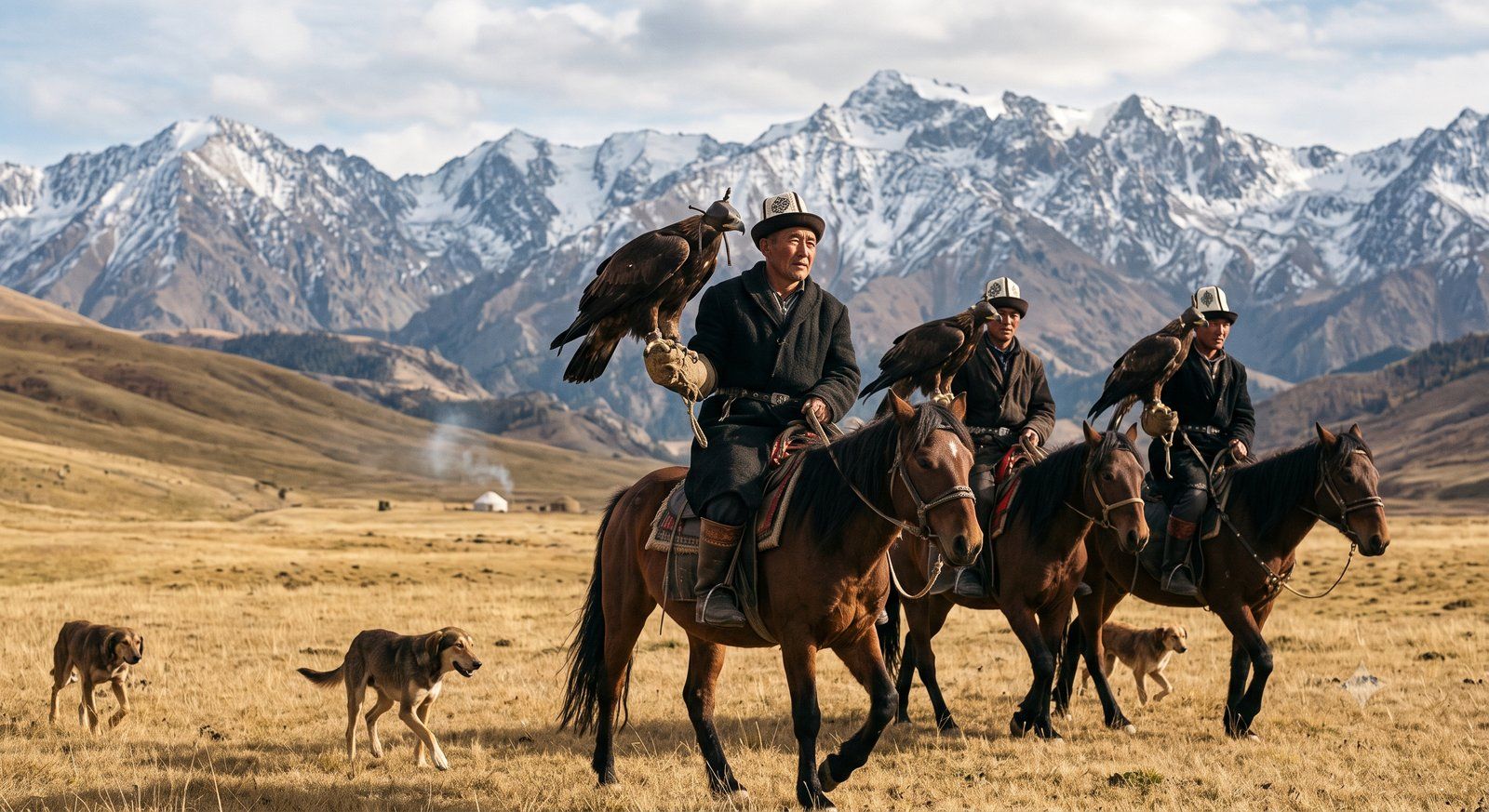
Berkutchi train and work with golden eagles within a wider falconry tradition passed through families and mentors. UNESCO's safeguarding language includes birds, quarry, habitats, legal frameworks and education.
Four questions worth asking
The quality of the encounter matters more than the most dramatic photograph.
- Who cares for and trains the eagle?
- What will the demonstration involve today?
- How does the visit support the practitioner or community?
- Are photography and close viewing appropriate now?
Why Bokonbaevo matters
The south shore of Issyk-Kul is an important center for Kyrgyz berkutchi culture. Tourism can support rural livelihoods and younger practitioners when the visit respects the bird and the people involved.
Sources
- UNESCO — Falconry, a living human heritagehttps://ich.unesco.org/en/decisions/16.COM/8.B.14
- EPA — Berkutchi eagle trainershttps://epaimages.com/berkutchi-eagle-trainers
I grew up on the south shore of Issyk-Kul — bürkütchü country. The eagle hunters are not folklore for me; they are men from the villages along my own shore, flying the same hills their fathers flew. This article is the honest version of what the tradition is, what it costs the bird and what it gives back, and how to see it properly. Names and family stories of the hunters I work with come from me personally — where they are still to be added, I say so rather than invent anything.
What is eagle hunting (bürkütchü) in Kyrgyzstan?
Eagle hunting is a form of falconry in which trained golden eagles — not falcons, whatever that word suggests elsewhere in Central Asia — hunt foxes, hares and marmots for their handler. The hunter is called a bürkütchü (berkutchi). The practice goes back thousands of years across what is now Kyrgyzstan, Kazakhstan, Mongolia and western China: in the old winters a good bürkütchü brought fur and meat home through the hardest months, and the skill passed from father to son. In December 2021 Kyrgyzstan was added to UNESCO’s multinational inscription of “Falconry, a living human heritage” on the Representative List of the Intangible Cultural Heritage of Humanity — one of six countries added that year, alongside Croatia, Ireland, the Netherlands, Poland and Slovakia.
How does an eagle learn to hunt?
Slowly, and only with one person. Hunting eagles are taken from the nest as fledglings at about three months old — old enough to fly, young enough to bond — and females are preferred because they are larger and more aggressive. The young bird is hand-fed, hooded (a leather hood keeps it calm by limiting distraction), and sung and talked to for hours by a single handler; it takes at least three years of daily work before an eagle is ready to hunt. The numbers explain the commitment: a mature Central Asian hunting eagle can weigh more than 9 kg and can spot a rabbit from about 5 km away. A trained bird kills cleanly — one strike to the back of the neck that does not damage the pelt — then guards the kill without eating it until the bürkütchü rides up.
What is salbuurun?
Salbuurun (also written salburun) is the full traditional hunting complex: the horse, the eagle, the taigan — the Kyrgyz sighthound, built something like an Afghan hound — and traditional archery, all working together. It is a core discipline at the World Nomad Games, and the word has become shorthand for the whole culture around mounted hunting.
Is eagle hunting still a living tradition, or just a show for tourists?
It is a living tradition. Many bürkütchü still take their birds into the mountains to hunt every winter — the real season runs roughly October to February, weather-dependent, while in summer the eagles molt and are flown less. The demonstrations travelers see are not a reenactment of something dead: they fund the preservation of something alive, flown by the same birds that hunt in winter. A good demonstration is a window into a working tradition — and that distinction is exactly what to look for when you choose who to go with.
Is eagle hunting ethical?
It depends entirely on the hunter — and you can learn to tell the difference. The honest cost side first: a wild bird is taken from its nest and spends years working for a person, and anyone who waves that away is not being straight with you. The other side: a well-kept hunting eagle is exercised, flown and fed daily by someone whose reputation rides on the bird’s condition, and by tradition it is released back to the wild to breed — a longer and freer life than most captive raptors anywhere get. So the real question is not “eagle hunting, yes or no?” but “this hunter, this bird, this practice?” That is why who you go with matters more than whether you go.
What happens to the eagle in the end?
By tradition, hunting eagles are released back to the wild to breed after years of partnership — every serious account agrees on that much. They disagree on the timing: one firsthand travel account puts release at roughly 8–10 years of work, while a hunter interviewed by another writer described keeping birds well-fed and releasing them around age 20 by gradually reducing food. I flag this honestly as “accounts vary” rather than picking a number. The hunters I work with can tell you themselves how and when they release their birds — ask them when you meet them.
What do ethical demonstrations look like?
The markers are easy to see once you know them. The birds are flown and exercised regularly, not kept for display. The handling is calm and unhurried — the hunter is in no rush to perform. The eagle flies at lures and pelts (a fox pelt dragged on a rope), never live prey: no animal is killed in a tourist demonstration or a training run. And the hunter puts the bird’s health ahead of the show, including ending early if the bird is not right that day.
What are the red flags?
Walk away from chained birds, from rushed or overly performative shows, and from anyone offering “real hunts” out of season. Experienced travelers put it bluntly: if a place feels rushed, overly performative, or involves chained birds, walk away. It is the same advice I give my own guests.
Who are the hunters I work with?
This is the part no booking platform can copy, so I will be careful with it. The bürkütchü I take guests to are working hunters from families in the Bokonbaevo area — men I have known for years, whose birds I have seen flown in season, not acts hired through an agency.
Around these families sits a small responsible-booking ecosystem: the Community-Based Tourism (CBT) office in Bokonbaevo and the Salburun Federation, an organization created to preserve and support traditional hunting. Both arrange demonstrations and help keep them preservation-oriented rather than purely performative. If you are traveling independently, that office is the right first stop.
Want to meet the hunters, not a show? Message me on WhatsApp via the contact page — tell me your dates and I will introduce you to them personally.
Where and when can you see eagle hunting?
The accessible hub is Bokonbaevo, a large village on the south shore of Issyk-Kul (Ton District) at about 1,750–1,800 m elevation — roughly 140 km, or about three hours by road, from Karakol, and about 200 km from Bishkek. It is home to several respected bürkütchü families, and guesthouses there arrange demonstrations with their own contacts. You may also find demonstrations in the Naryn Region (more remote, less tourist-focused) and occasionally in the Chon-Kemin Valley. As for timing: demonstrations can be arranged at almost any time of year, but real hunts are winter-only, roughly October to February. More on the village and what surrounds it in my guide to Bokonbaevo and the south shore.
What about festivals?
The Birds of Prey Festival — often called the Salbuurun festival — takes place in the Bokonbaevo area in early August, with eagle and falcon competitions, taigan events, traditional music and felt-craft exhibitions. The 2025 edition was held on 10 August 2025 at the Jaichy yurt camp near Kok-Sai village; a 2026 edition has been announced for 1 August 2026 — announced through a single social-media post, so confirm the date locally before building a trip around it (the festival moves year to year). On the bigger stage, salbuurun is a core discipline at the World Nomad Games, which return to Kyrgyzstan 31 August – 6 September 2026; I cover dates, venues and side trips in my World Nomad Games 2026 guide.
What actually happens at a demonstration?
A typical demonstration near Bokonbaevo lasts one to two hours and follows a recognizable arc. It starts calmly: the hunter introduces the bird — its training, diet, daily care, the relationship between them, and the history of the tradition. Then the eagle is carried (often by a second man on horseback) up a rise; on the signal it launches, soars, and drops onto a lure — first a static target, then a moving one dragged behind a galloping horse. Experienced handlers can often call exactly where the bird will strike. Many demonstrations bundle the rest of salbuurun: taigan dogs working on the ground, and traditional archery with a handmade bow for guests to try. At the end you are usually shown how to hold the eagle — gloved, sometimes hooded; the practice varies — with time for questions throughout. One thing a demonstration does not involve is live prey.
Can I take photos?
Yes — demonstrations are photo-friendly, and nobody will rush you. The hold-the-eagle shot is a standard part of the experience: handlers coach you to raise your arm so the eagle spreads its wings, which is how that classic photograph is made. (Now you know the trick — and at upwards of 9 kg of bird on your wrist, holding the pose is harder than it looks.) The one rule that matters is the same as anywhere in Kyrgyz village life: ask before photographing people or private family spaces.
How much does it cost, and how do you see it with us?
Demonstration prices move with the season, the group size and whether transport is included, and there is no official tariff to point you to — so I deliberately do not publish figures here. Confirm the current figure locally on the day, or write to me and I will tell you what my guests are paying this season. Booking is normally local and last-minute — through your guesthouse, the CBT office or the Salburun Federation — and bookings through international platforms tend to be overpriced. The money is not incidental, either: magazine reporting on the south shore has described demonstration fees as real income that keeps a winter tradition viable between seasons.
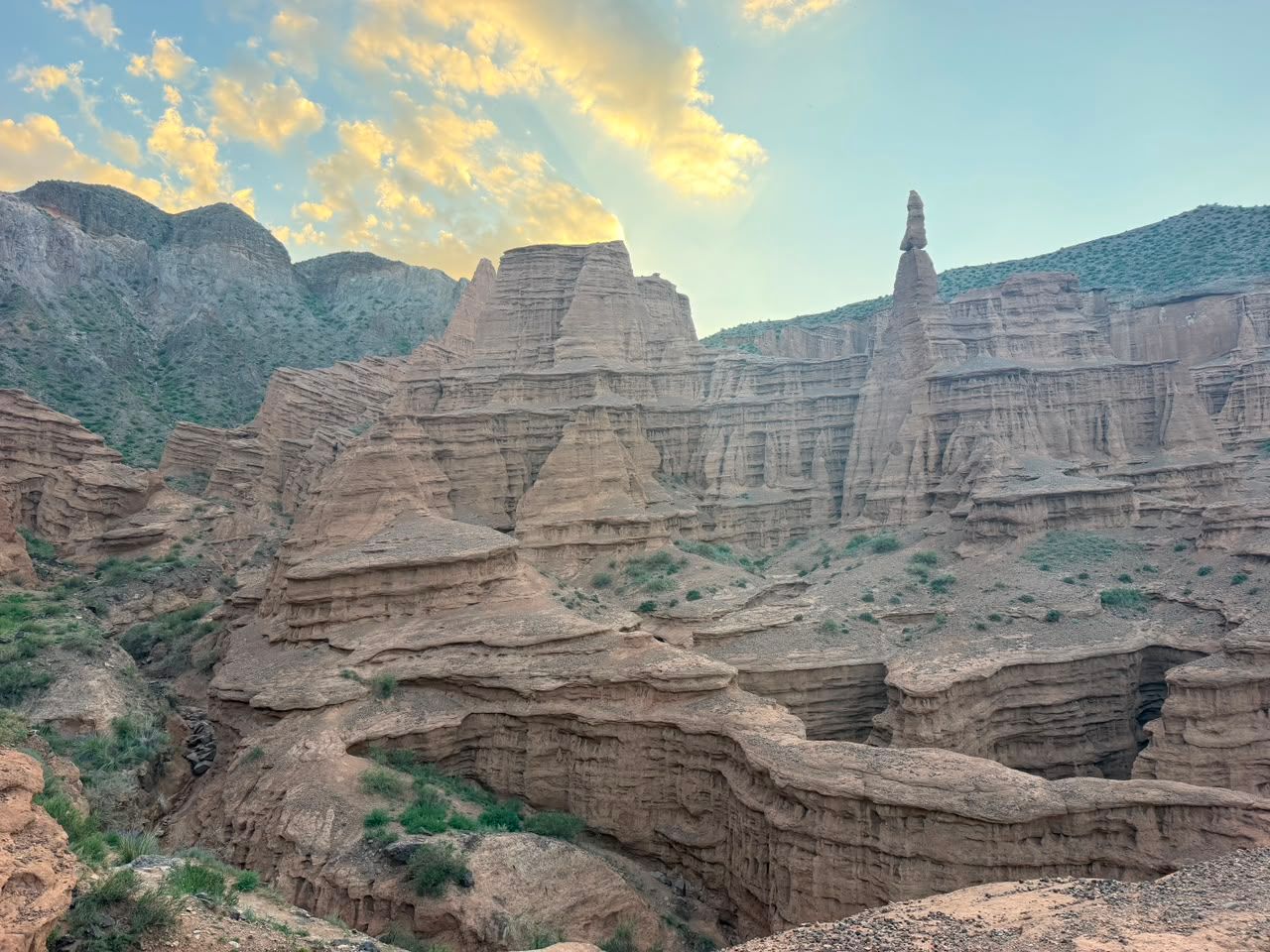
The way I do it: an eagle demonstration is woven into a wider day or week on the south shore — Skazka Canyon, the yurt-builders of Kyzyl-Tuu, the summer pastures — with hunters I know personally, at the local price. That booking path lives on my cultural and Silk Road tours page, where you can see how a demonstration fits into a route.