
The 6-day route
Six days, one road: horses at Son-Kul, eagles on the south shore, hot springs at Altyn Arashan.
My own fixed route across the Tien Shan — two yurt nights on the high pasture, three hotel nights, one loop from Bishkek.
- Fitness
- Easy—moderate
- Season
- June—September
- Duration
- 6 days / 5 nights
- Region
- Son-Kul, Issyk-Kul south and north shores
Built for first-timers who want the real thing.
No riding experience needed — the Son-Kul day is paced for beginners. You should be comfortable with long driving days and two nights of simple yurt-camp life at altitude.
Good for
- First-time visitors who want horses, nomadic culture and mountains in one trip
- Travelers with a week or less who do not want to choose between Son-Kul and Issyk-Kul
- Couples, families and small private groups
- Photographers — canyons, eagles, high pasture and hot springs in six days
Not for
- Anyone unwilling to sleep two nights in a shared shepherd yurt (no showers, outdoor toilets)
- Travelers with medical reasons to avoid sleeping at 3,016 m
- Anyone expecting fast riding — the horseback day is a pasture ride, not a gallop tour
The three experiences this route is built around.
Guests kept asking for these three separately — this tour puts them in one loop.
Horseback riding at Son-Kul
A full day riding the high pastures around the shepherd lake at 3,016 m, with two nights in a traditional yurt camp — the heart of the trip.
Eagle hunting at Bokonbayevo
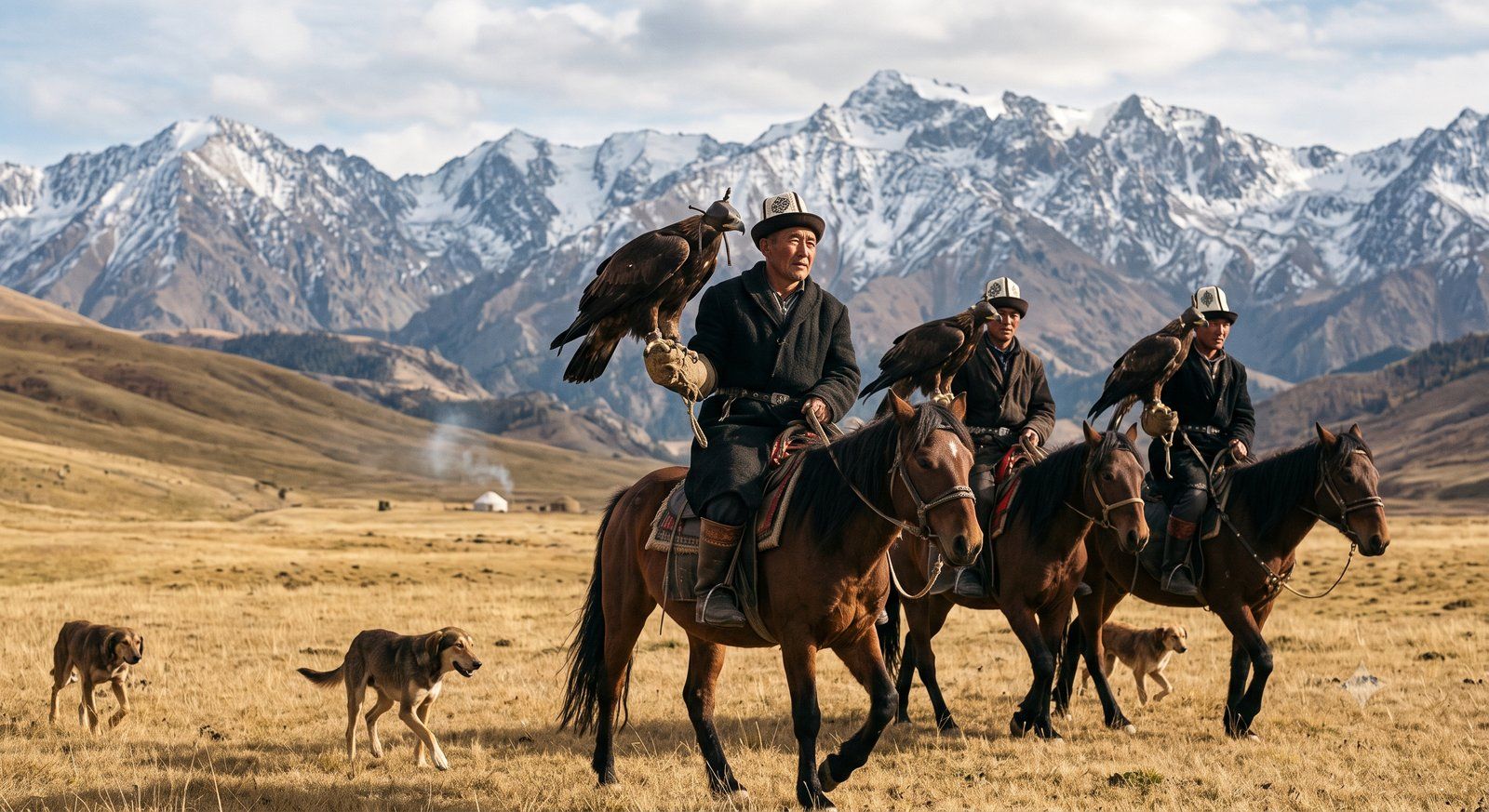
A demonstration with a berkutchi I know personally — the bird, the training, the history, and your turn to hold a golden eagle.
Altyn Arashan by 4x4
A rugged mountain run up Karakol Gorge — rocky sections and river crossings — to a valley walk and natural hot springs.
What to expect
Accommodation
Two nights in a traditional yurt camp at Son-Kul, three nights in hotels (Bokonbayevo and Karakol).
Altitude
The route crosses the 3,446 m Kalmak-Ashuu pass and sleeps two nights at 3,016 m. We ascend gradually, but tell me about any heart or blood-pressure conditions before booking.
Driving
This is a road journey with long transfers between regions — the distances are what make the variety possible. Day 5 swaps the minibus for a 4x4.
Season
June to September, while the Son-Kul yurt camps are up and the pass is open. Exact dates depend on the snow year.
This is the route I would put together if a friend had one week in Kyrgyzstan and asked me not to waste a day of it. It starts and ends in Bishkek, loops over the high plateau to Son-Kul, comes down to the south shore of Issyk-Kul and finishes along the north shore — horses, felt, eagles, canyons and hot springs in six days, with two nights in shepherd yurts and three in hotels. Unlike the sample itineraries elsewhere on this site, this is a fixed program I actually run; if you want a day added, removed or reordered, tell me and we adjust it on inquiry.
Why these six days?
Because they answer the three questions I hear most. “Can I ride a horse to the high pastures without any experience?” — yes, day two. “Can I actually meet an eagle hunter, not just read about one?” — yes, day three, with a berkutchi I know on the south shore. “Is Altyn Arashan worth the road?” — day five, and the road is half the point. Everything between those anchors — the felt workshop, the canyons, the petroglyphs — is there because the road passes through country that deserves a stop, not because a brochure needed filling.
The day-by-day route
Day 1 — Bishkek to Son-Kul: canyon, felt workshop, the pass
We leave Bishkek in the morning and climb out of the Chuy valley. First stop is Kok-Moynok Canyon, where wind and water have cut the sandstone into walls and towers — a short walk, good legs-stretcher after the drive. In Kochkor we visit a shyrdak workshop: shyrdak are the stitched felt carpets that insulate and decorate every yurt, and you will watch the patterns being cut and sewn by the women who still make them — with your own hands in the felt if you want. Then the road climbs over the Kalmak-Ashuu pass at 3,446 m and drops onto the Son-Kul plateau. Night in a yurt at the lake, 3,016 m.
Day 2 — Son-Kul: a day on horseback
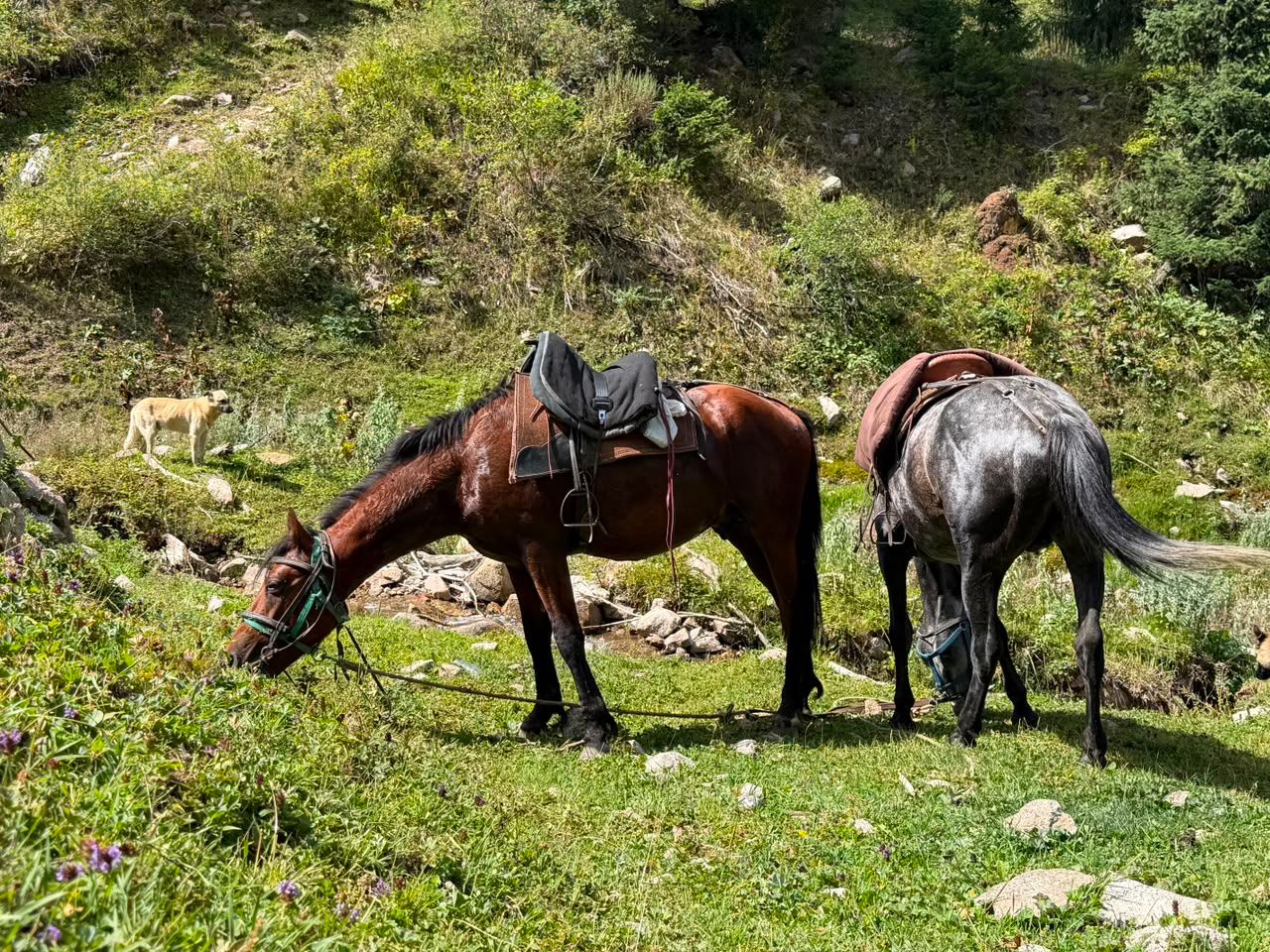
A full day on the jailoo — the high summer pasture. We ride out from camp across the open grassland; the horses are calm mountain horses, the pace is walk with some trot for those who want it, and beginners get a basics lesson before we set off. There is free time at the lake for photographs, walking, or simply sitting in a yurt with tea watching shepherd life happen around you. Second night in the yurt camp. If horses are the main reason you are coming, say so — for a deeper riding trip, my horse trekking page covers multi-day treks.
Day 3 — Son-Kul to Bokonbayevo: down to the lake, up with the eagles
We descend from the plateau, pass the Orto-Tokoy reservoir at about 1,750 m and stop at Aksay Canyon before reaching Bokonbayevo, the village that has become the center of the south shore’s eagle-hunting tradition. In the afternoon, a demonstration: the hunter introduces his bird, she launches from a rise and stoops on a moving lure behind a galloping horse — and at the end you can hold her yourself, gloved, for the photograph everyone wants. My full eagle hunting guide explains the tradition and what a demonstration involves. Night in a hotel in Bokonbayevo — a real bed and a hot shower after the yurts.
Day 4 — The south shore: Mars, the Fairy Tale and the Seven Bulls
Today is geology. We follow the south shore of Issyk-Kul through three very different landscapes: Mars Canyon, bare red-and-orange ridges that earn the name; Skazka — “Fairy Tale” — Canyon, where the ochre sandstone erodes into castles and animals; and Jeti-Oguz, the famous red cliffs of the Seven Bulls and the Broken Heart rock, with the high Tien Shan and the Oguz-Bashy peak filling the horizon behind them. Night in a hotel in Karakol, the east-shore town that is my home ground.
Day 5 — Altyn Arashan: the 4x4 day
We leave the minibus in Karakol and take a serious 4x4 up the Karakol Gorge — this road is rocky, fords rivers, and is part of the experience, not an inconvenience. At Altyn Arashan you can walk the valley, sit by the river, and finish in the natural hot springs the valley is named for (“golden spa” in Kyrgyz). Bring swimwear and a towel. Back down to Karakol for the night.
Day 6 — Karakol to Bishkek: nomadic culture and the north shore
The return runs along Issyk-Kul’s north shore. First, Kyrchyn Ethno-Town — the traditional yurt settlement best known as a venue of the World Nomad Games — for nomadic architecture and culture in one place (my World Nomad Games guide has the backstory). Then the forests and rivers of Semenov Gorge, the Ruh Ordo cultural center at Cholpon-Ata, and the open-air petroglyph field — bronze-age carvings of ibex and hunters on glacial boulders. We reach Bishkek via the Boom Gorge in the evening.
Two nights in a yurt — honestly, what is that like?
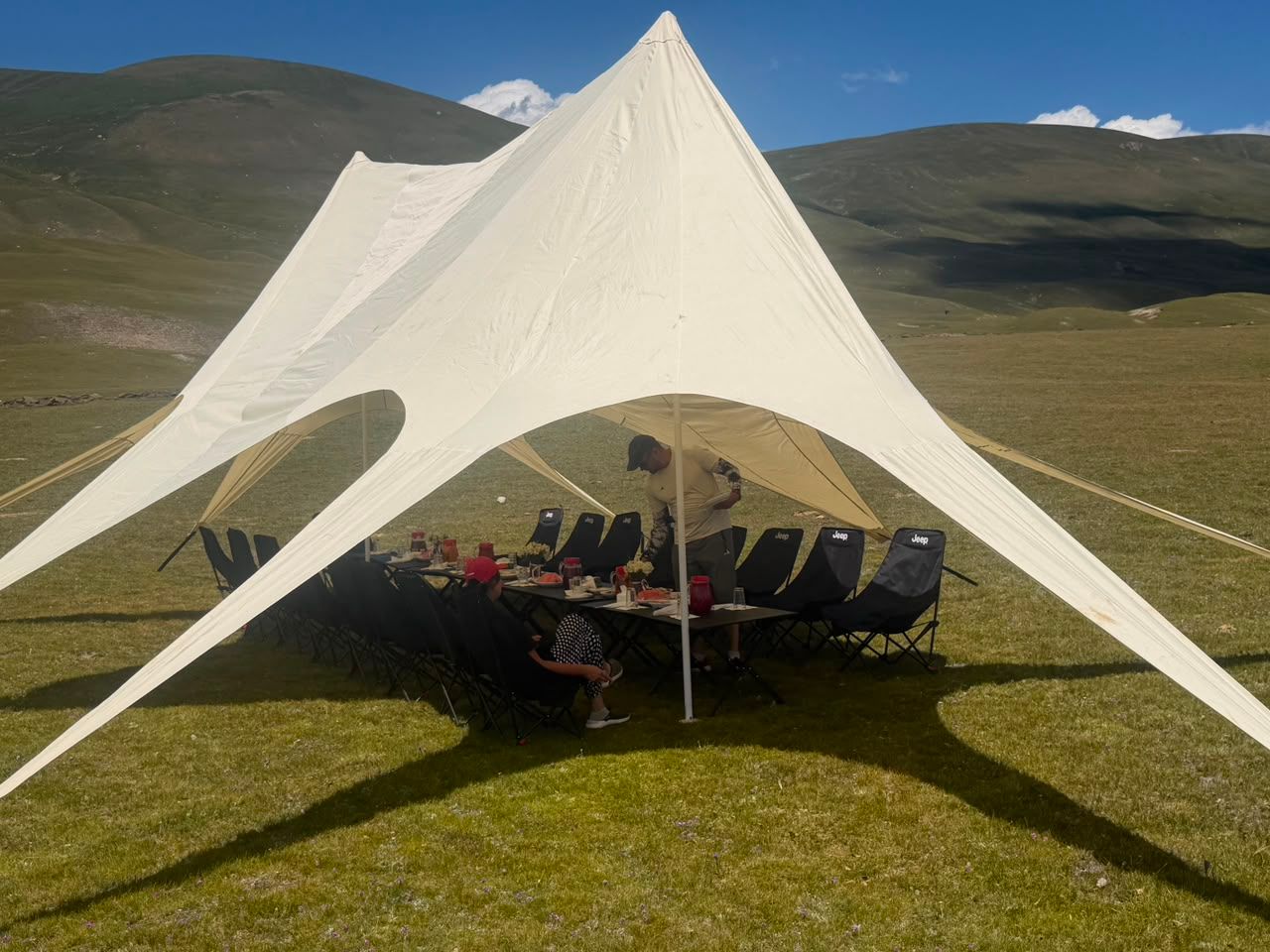
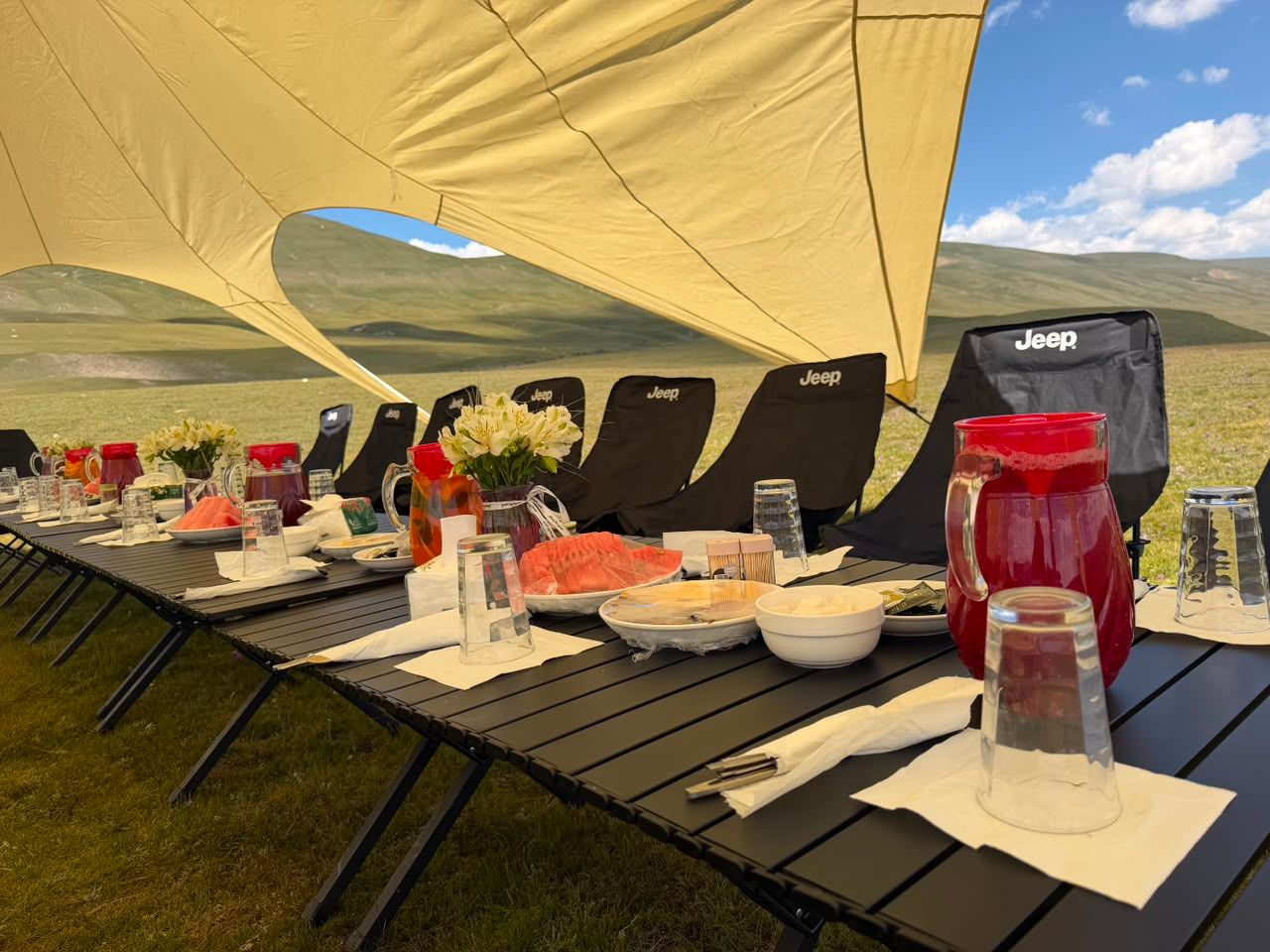
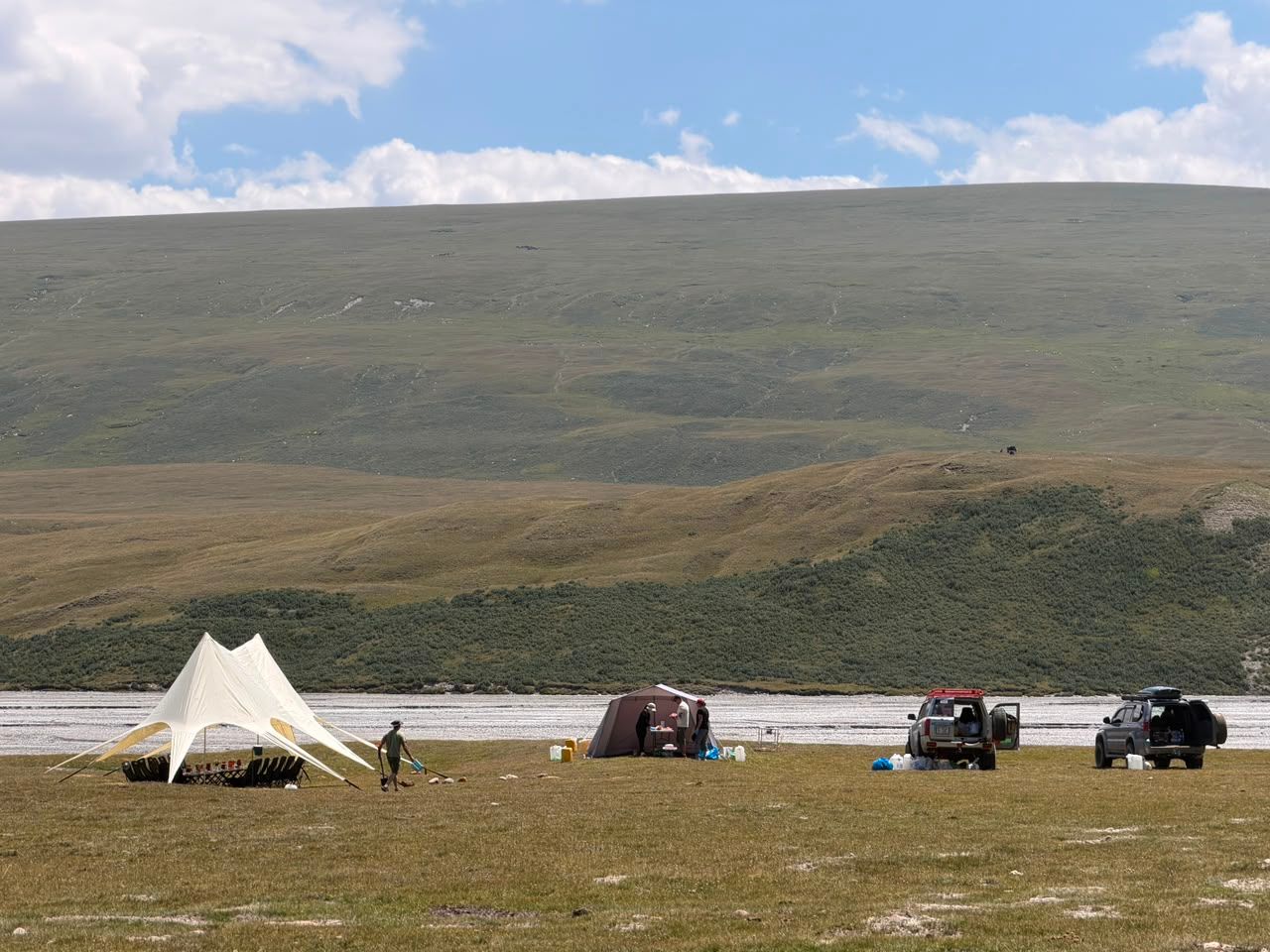
It is the part guests talk about most, and the part I am most careful to describe straight. You sleep in a shared felt yurt on mattresses and quilts laid on the floor, warm once the stove is lit. Toilets are outdoor drop toilets, there are no showers, and there is little to no phone signal on the plateau — some camps now sell Starlink access separately. Nights are cold even in July; bring a sleeping bag rated to about −5 °C and full layers. In exchange you get shepherd families, fresh kymyz if you are curious, and a sky with more stars than most people have ever seen. The three hotel nights (Bokonbayevo, two in Karakol) are placed so the simple nights never come back-to-back with a long drive.
What does the 6-day adventure cost?
I do not publish a fixed price, for the same reason I do not on my other tours — the honest figure depends on your group size and travel dates, and printed numbers go stale within a season. What moves the quote: how many of you share the vehicle and guide, your hotel category in Bokonbayevo and Karakol, and the month you travel. Send me your dates and group size through the contact form or WhatsApp and I will give you a current, exact figure for your group — no obligation.
When can we go?
June to September, while the Son-Kul camps are up and Kalmak-Ashuu is open — July and August are the fullest pasture season; September is quieter and golden but colder at night. The pass closes for winter (in 2025 it closed to traffic on 6 November), and the exact season edges shift with the snow year, so we confirm dates when you write. July and August: the good camps and horses are spoken for early — write by May or June if you want peak-season dates. For the month-by-month picture across all activities, see when to go.
If this route is the shape of the trip you want — or close to it — send me your dates, group size and anything you would change, through the contact form or straight to WhatsApp. I answer personally.
Kylych replies personally — if he's in the mountains, expect an answer within 2–3 days.
Plan this trip — send your dates
I read every inquiry myself and reply with questions, then a draft program.
Thank you — I read every inquiry myself. If I'm on a trek, expect a reply within 2–3 days.
I'll reply directly to the email address you gave.