Destinations
Sary-Chelek, with enough time to understand the place.
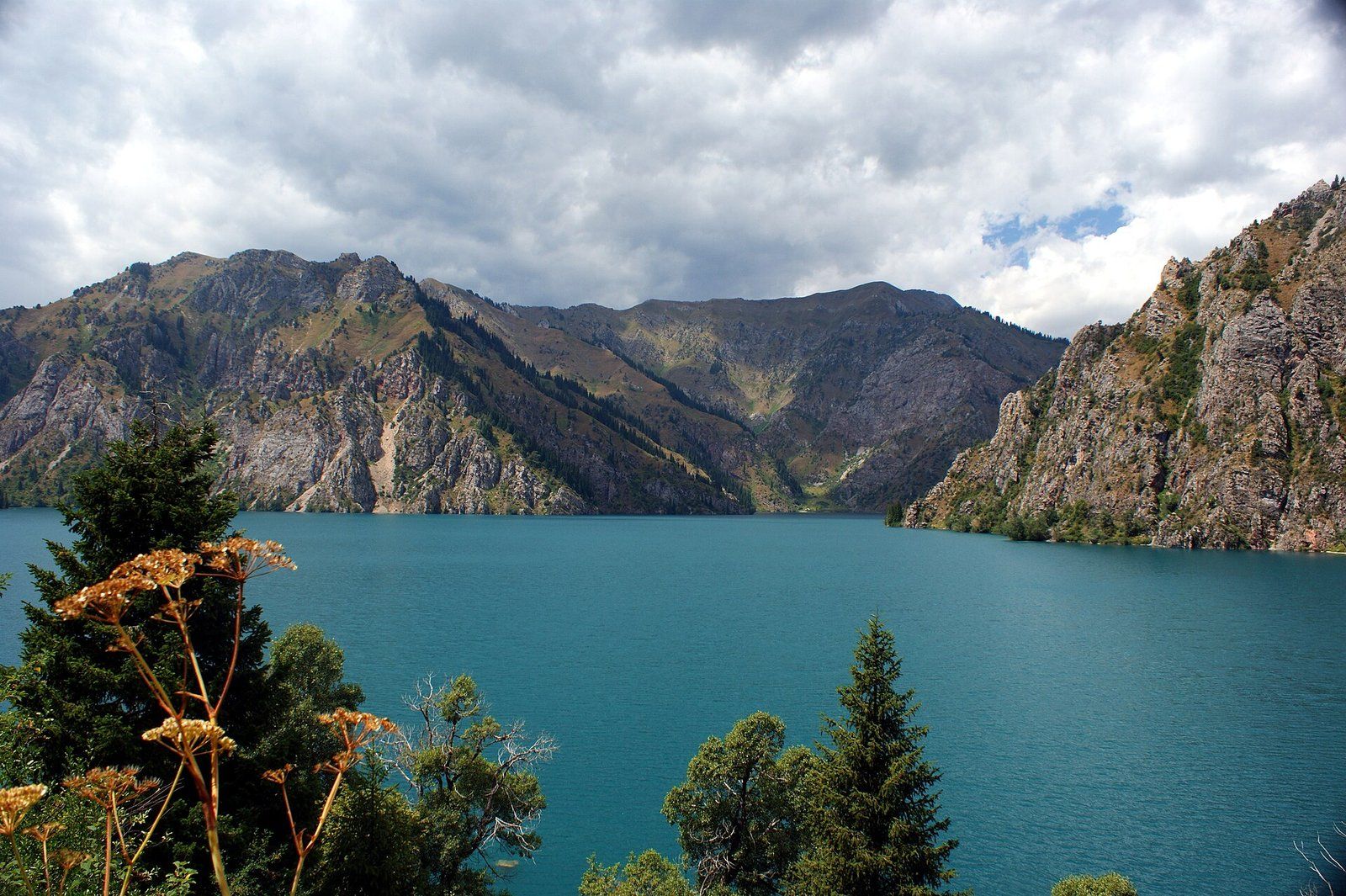
Protected western forests and a deep mountain lake.
Photo by Kondephy on CC BY-SA 4.0

- Season
- May—October
- Base
- Arkit
- Pace
- 2—3 days
Go for the place—not only the landmark.
The strongest visit leaves room for local conditions, short walks and the road itself.
- Use one practical base instead of changing hotels every night.
- Match outdoor plans to the season before fixing transfers.
- Leave margin for mountain roads, weather and unplanned stops.
Build a route that still feels like a journey.
Pair nearby places before adding another distant region.
Issyk-Kul
A sensible companion when dates and road conditions allow.
Song-Kul
A sensible companion when dates and road conditions allow.
Ala-Archa
A sensible companion when dates and road conditions allow.
What to decide before you go
Access
Mountain roads take longer than the map suggests; confirm the current approach.
Stay
Choose the base around the next day's activity, not only the best-known town.
Conditions
Weather, road work and seasonal camps can change the final plan.
Sary-Chelek is a biosphere reserve on the southern spurs of the Chatkal Range in the western Tien Shan — seven alpine lakes in protected walnut and fruit forest, a world away from the Issyk-Kul circuit. It is also a long way from everything, and I will be honest about that from the start: reaching it takes the better part of a day from the nearest city, so treat it as a multi-day commitment, not a detour. This page lays out what the reserve is, how to get there from Osh, Bishkek or Jalal-Abad, what the rules and fees are, and what you can walk once you arrive.
What is Sary-Chelek?
Sary-Chelek is a strict nature reserve created in 1959 on the southern spurs of the Chatkal Range in Jalal-Abad region, later designated part of UNESCO’s World Network of Biosphere Reserves — the designation is usually dated to 1978, though UNESCO’s own profile confirms the status without stating the year. Do not confuse this with the separate 2016 “Western Tien-Shan” World Heritage listing; they are two different UNESCO designations and are often muddled online.
The reserve holds seven alpine lakes. The largest, Sary-Chelek itself, sits at about 1,880 m (sources conflict — 1,873 m and 1,887 m are both published, and UNESCO rounds it to ~2,000 m), is over 230 m deep (234 m and 245 m are both cited), and runs about 7.5 km long — by some measures the second-deepest lake in Kyrgyzstan. The second- and third-largest lakes are Kyz-Kul and Iri-Kul. The reserve as a whole spans 1,200–4,247 m in elevation.
The name means “yellow bucket,” and the two explanations you’ll hear are both folklore rather than fact: a legend about a beekeeper’s barrel of honey, and the yellow-orange color the surrounding forest turns every autumn. Treat both as legend — but if you see the lake in late September, you will understand why the second story persists.
Why visit a reserve instead of a regular lake?
Because a reserve protects things a regular lake cannot keep. UNESCO’s own profile describes Sary-Chelek’s habitats as nut-fruit forests — walnut, wild apple and pear — with Semenov fir and Schrenk spruce on the slopes. Around 40 mammal species live here, including bear and lynx, and the birdlife is rich. You may see none of the large animals on a given visit — I will never promise wildlife sightings — but you will walk through forest that exists in this form in very few places left. In autumn, roughly mid-September to early November, the walnut and fruit forests turn gold, and the lake shows the colors its name comes from.
The practical difference a traveler feels is this: no jet skis, no beach bars, no construction on the shore. The lake is clear, the shoreline is forest, and the loudest sound most evenings is the water. After the busy north-shore resorts of Issyk-Kul, Sary-Chelek feels like a different country — that is what protected status buys you, and it is why the rules in the next sections are worth respecting.
How do I get to Sary-Chelek?
The reserve is in Jalal-Abad region, roughly 500 road kilometres from Bishkek and 300 km from Osh. The park gate is at Arkit village; from the gate, a 17 km dirt road (about 40 minutes by car) climbs to the lake itself. I don’t list fares here — they drift year to year, so recheck the current figures locally, or ask me, before you travel.
| From | Option | Time |
|---|---|---|
| Osh | Daily marshrutka to Arkit (departs ~7:30 from the new bus station) | ~7.5 h |
| Osh | Shared taxi | ~6 h |
| Osh | Private car via CBT Osh | ~6 h |
| Bishkek | Shared taxi via Tash-Komur | ~6 h + ~3 h (~9 h total) |
| Jalal-Abad | Through-marshrutka | ~6 h |
| Jalal-Abad | Shared taxi | ~5 h |
The return marshrutka from Arkit to Osh leaves early, around 6:00. Whatever your route, plan to sleep in Arkit on arrival night and enter the reserve fresh the next morning.
From Osh?
Osh is the natural gateway if you are already in the south. The daily marshrutka (~7.5 hours) leaves the new bus station around 7:30; a shared taxi is faster at roughly 6 hours. If you are a group, a private car arranged through CBT Osh is often the best value per seat.
From Bishkek?
From the capital, reckon on about 9 hours by public transport: a shared taxi to Tash-Komur (~6 hours), then another onward to Arkit (~3 hours). You may see a direct Bishkek–Arkit shared taxi mentioned in forums — it has been reported, but I cannot confirm it runs regularly, so build your plan around the Tash-Komur route.
From Jalal-Abad?
The through-marshrutka takes about 6 hours; a shared taxi does it in around 5.
How do I get from the Arkit gate to the lake?
If you are entering on foot, the gate admits hikers only between 7:00 and 14:00, and there is no camping allowed between the gate and the lake — so an early start is not optional. In high season, marshrutkas and shared taxis run the gate-to-lake road for a per-seat fare, and you can also hire a car round trip — agree the price before you set off.
This is the point in the trip where independent travelers usually start messaging me. If you would rather have the long transfer, the Arkit bed and the gate logistics arranged in one go — and a driver who actually shows up at 6:00 for the return — message me on WhatsApp (the green button below) or use the contact form.
What are the rules in the reserve?
The rules are strict, and I think they are the reason the place is worth visiting, so I explain them rather than apologize for them:
- No swimming in the reserve’s lakes. The exception is Kara-Suu Lake, outside the core zone, where swimming is allowed.
- No fishing, no hunting, no plant collecting — this is a biosphere reserve, not a recreation park.
- Stay on the trails.
- Camp only at designated sites. Camping at Iri-Kul is no longer allowed (a 2025 update); use the Sary-Chelek lakeshore campsite instead.
- Rangers check receipts at the lake, so keep yours.
How much does Sary-Chelek cost?
There is an entrance fee per foreign visitor (a lower rate for Kyrgyz citizens), plus a small charge per private vehicle, and camping at the designated sites is paid per tent per night. I don’t quote the figures here because reserve fees change — pay at the gate, keep the receipt (rangers check them at the lake), and recheck the current rates before you travel, or ask me. Arkit homestays charge per person with breakfast, plus a little for extra meals — family prices, agreed when you book. Boat rides on the lake are informal motorboat trips negotiated on the shore; agree the price before you get in, and don’t be shy about walking away from a silly number.
What treks and hikes can I do at Sary-Chelek?
Four main options, from an easy day walk to a serious week:
| Route | Distance | Time | Max altitude | Difficulty |
|---|---|---|---|---|
| Arkit ↔ lake day walk | 34 km round trip | ~8 h | ~1,900 m | Easy–moderate |
| Seven Lakes day hike | 11 km | ~4 h | ~2,016 m | Easy |
| Kotormo Pass trek to Kara-Suu | 53 km | 3 days | 2,446 m | Moderate |
| Reserve & Chatkal traverse | 65 km | 8 days | 2,833 m | Challenging — guide recommended |
These are the standard published routes; any version I run for you is a sample itinerary — the final program is tailored on inquiry.
The Arkit↔lake day walk
The simplest option: walk the gate-to-lake road on foot, 34 km round trip in about 8 hours, climbing via the Panorama Hill viewpoint. Easy to moderate, and it needs no transport arrangement beyond the gate opening hours.
The Seven Lakes day hike
An 11 km, roughly 4-hour easy hike that visits six of the seven lakes — Kyz-Kul, Tuyuk, Chacha-Kol, Haram-Kul and Iri-Kul among them. It needs a pre-arranged drop-off and pick-up, which is where a local contact earns their keep. Longer 20 km loop and 2-day variants exist if you want more time in the forest.
The 3-day Kotormo Pass trek
The classic overnight: 53 km over Kotormo Pass (2,446 m) to Kara-Suu Lake, finishing at Kyzyl-Kol village. Camping on the Kara-Suu shore is free; yurt camps charge per person with meals — seasonal rates, so confirm the current figure when you arrange your stay. And yes — Kara-Suu is the lake where you are allowed to swim.
Longer options
The 8-day, 65 km traverse of the reserve and the Chatkal Mountains tops out at 2,833 m; go with a guide. Horse-trek variants run via Kara-Suu and Makmal Pass (2,700 m) — 4 days on horseback or 5 days trekking, moderate, with an operator season of roughly May 25–September 30.
When is the best time to visit Sary-Chelek?
May to October for hiking and horse riding. July to September is the busiest period — warm days around 25 °C and local families picnicking at the lake. My favorite window is mid-September to early November, when the crowds are gone and the walnut forests turn gold. Winter access is unreliable because of snow on the road. Note that local operators work a slightly tighter season, roughly mid/late May to the end of September. For the full month-by-month picture, see best month for each activity.
Where do I stay — inside or outside the reserve?
There is no accommodation inside the reserve except the designated campsites — that is the point of a reserve. The practical base is Arkit village, where family homestays charge per person with breakfast — modest family rates that shift season to season; I confirm the current figures when I book. Set your expectations honestly: this is not a resort destination, there are no hotels at the lake, and the simplicity is part of what keeps the place as it is.
How do I visit Sary-Chelek with a local guide?
The value here is logistics and local knowledge: the 9-hour transfer handled end to end, the Arkit homestay booked, gate timing respected, drop-offs for the Seven Lakes hike arranged, and someone who knows which trek actually fits your legs and your dates. Sary-Chelek pairs naturally with Osh and the south — see how Sary-Chelek fits a south-Kyrgyzstan route. Our eco tours into the biosphere reserve cover the gentler options, and the longer treks sit under guided trekking in the western Tien Shan. Tell me your dates and group size through the contact form or on WhatsApp, and I will tell you honestly what fits.
Message us on WhatsApp (opens in new tab)
Contact
Want to see this place with someone who knows the road in? Message Kylych on WhatsApp with your dates and group size, or send the inquiry form — you will hear back with an honest plan, not a package pitch.