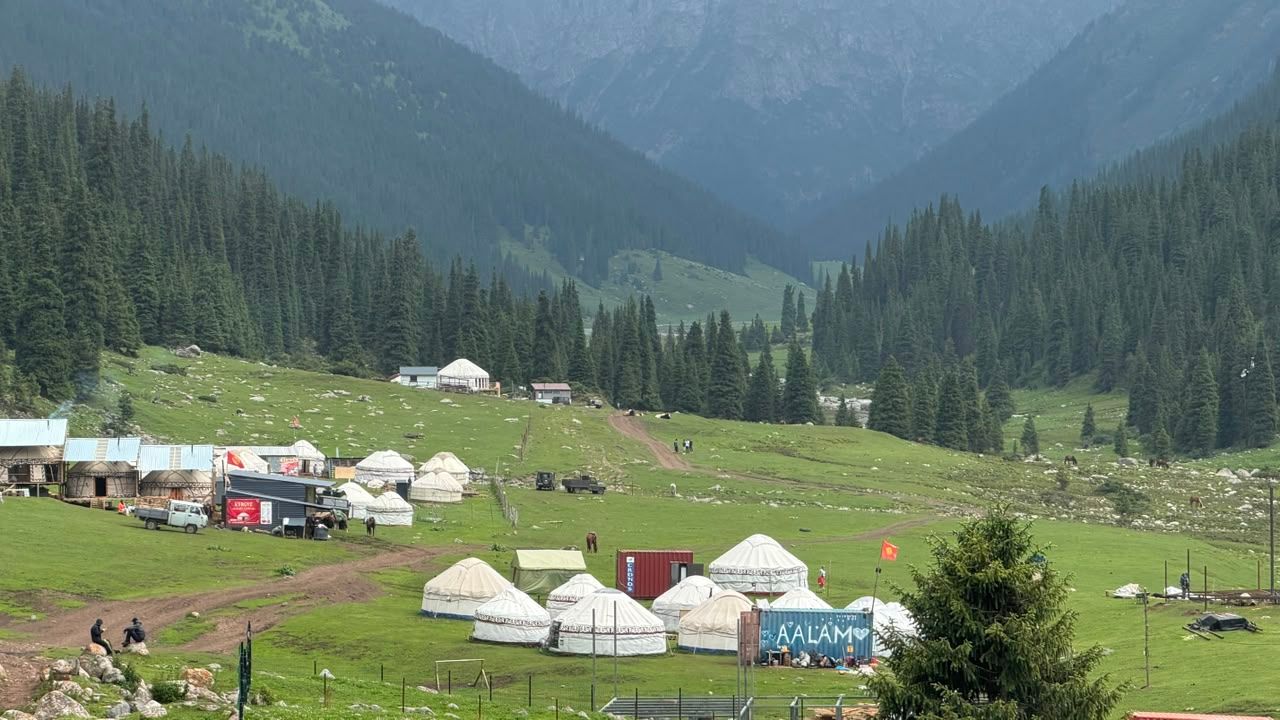
Field guide
Horse Trekking for Beginners
Saddle time, safety, packing and how to choose a responsible trip when you have never ridden.
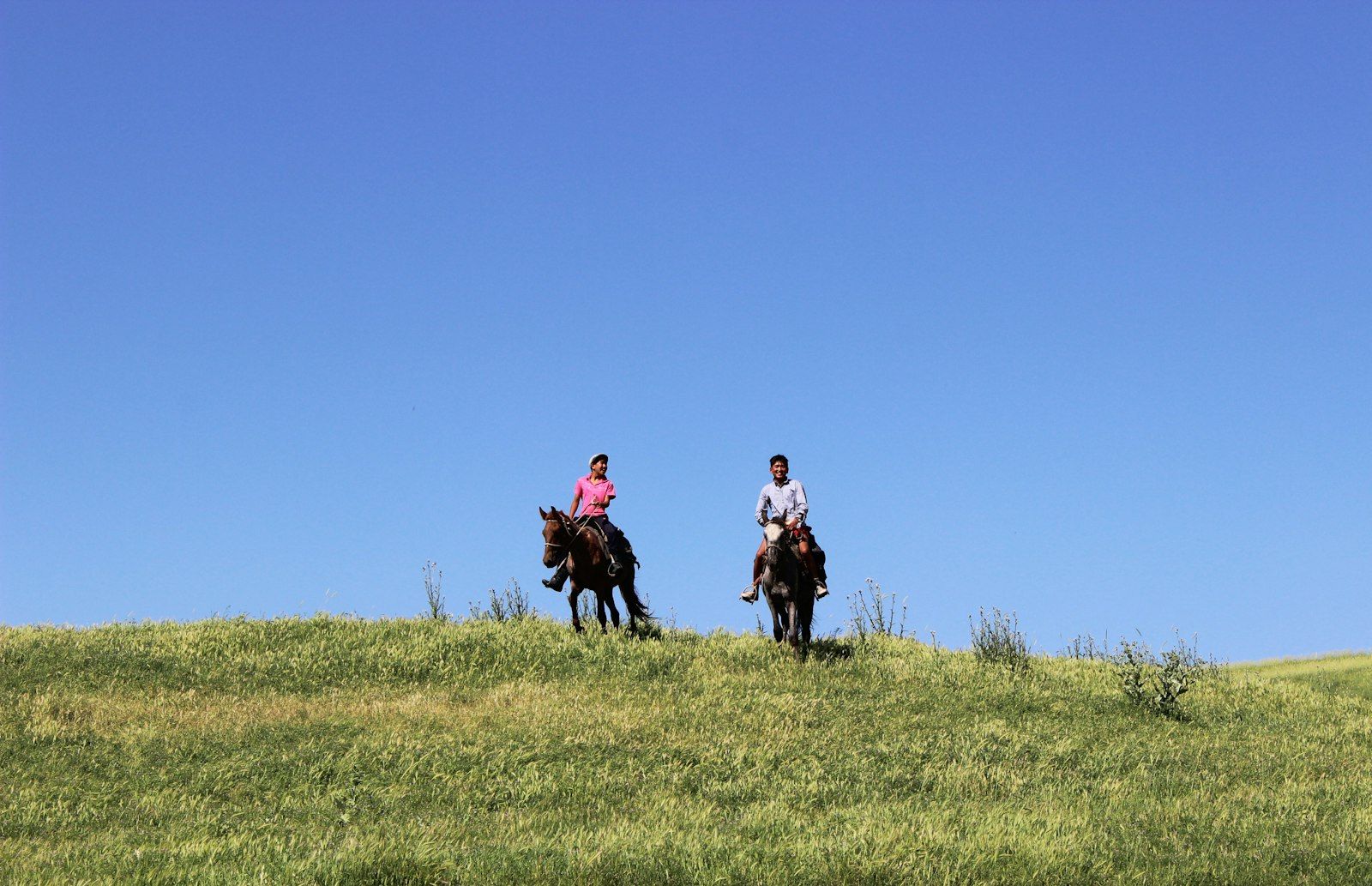
Photo by Victoria Nazaruk on Unsplash
Quick answer
Beginners can ride, but beginner-friendly should mean adapted—not effortless. Start short, use a helmet and be honest about recent experience.
Before booking
A calm horse and a realistic number of saddle hours matter more than a dramatic route.
- Describe your riding experience accurately—even if it is none.
- Ask whether a helmet and safety briefing are included.
- Check that travel insurance covers horse riding.
- Ask how horses are matched to riders and cared for.
On the trail
Approach horses from the side, avoid walking directly behind them, keep the order set by the guide, and speak up early if the saddle or pace is causing a problem.
A realistic progression
Begin with a half or full day. If that feels comfortable, consider two or three days with moderate hours and simple yurt stays. Multi-day routes add saddle fatigue, altitude and fast-changing weather.
Sources
- Journal of Nomads — Horse riding in Kyrgyzstanhttps://www.journalofnomads.com/horse-riding-in-kyrgyzstan/
- Kyrgyzstan Tourism — Song-Kul horseback triphttps://kyrgyzstan-tourism.com/tours/3-day-horseback-adventure-songkol-lake/
- Beyond Wild Places — Song-Kul horse trekhttps://beyondwildplaces.com/horse-trek-to-song-kul-lake-in-kyrgyzstan/
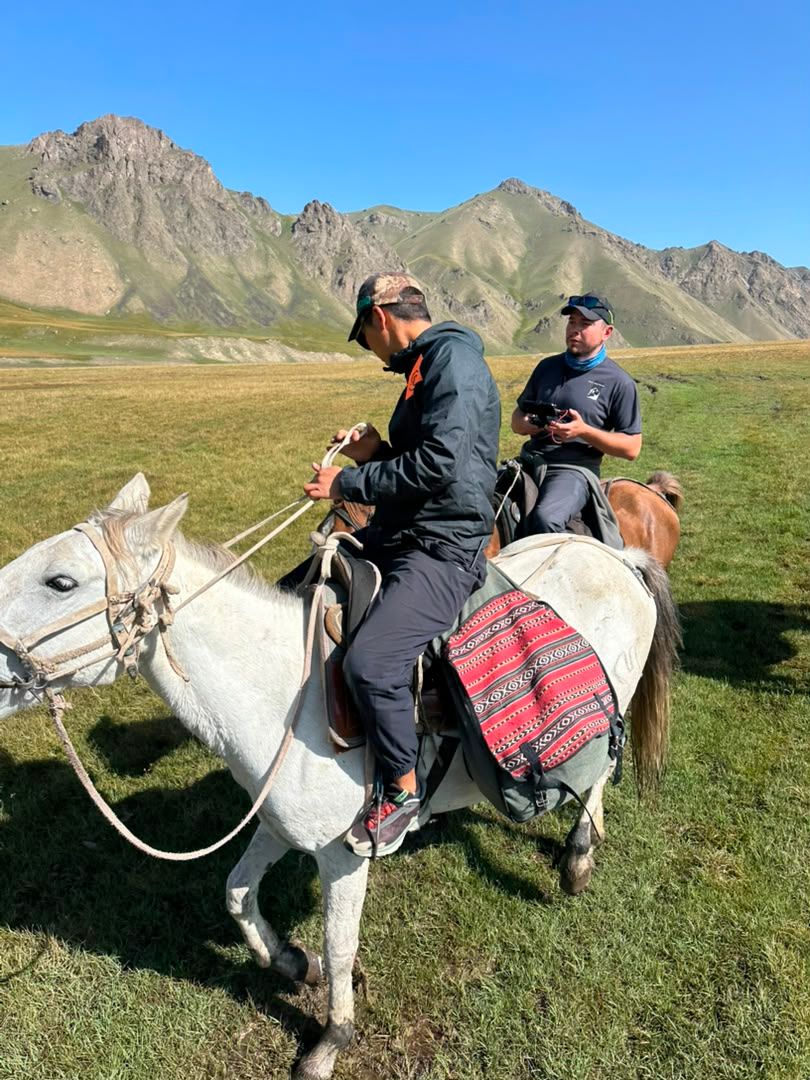
Most people who ride to Song-Kul have never been on a horse before — that is the normal case, not the exception. What the booking pages do not tell you is what that actually feels like: the hours in the saddle, the toilets, the dust, and the questions worth asking about the horse before you hand over any money. This is the article I would want my own first-time riders to read before they come.
One thing to understand before any of it: in Kyrgyzstan you are not borrowing an animal from a stable, you are stepping into a culture that has lived on horseback for more than 2,500 years. We say horses are the wings of the Kyrgyz people — and that on the jailoo, the summer pasture, a careless rider becomes a pedestrian. Your guides grew up in that world, which is exactly why a beginner is safe in it.
Do I need riding experience for a horse trek in Kyrgyzstan?
No. Most Song-Kul riders are complete beginners, and the format is built around that: guides give a short basics lesson at the start, and multi-day expeditions are explicitly sold as no-experience-needed. What “beginner-friendly” honestly means: calm mountain horses, a walking pace for most of the day, and a guide who stays close. What it does not mean: that it feels like nothing. You still spend hours a day in the saddle, and your body will have opinions about that — more below.
Never ridden? Tell me when you are coming and how many you are, and we will plan your first trek together: message me on WhatsApp via the contact page.
What does a beginner trek actually look like?
The classic first trek is the 3-day crossing from Kyzart to Song-Kul, an alpine lake at 3,016 m in the Naryn region. Kyzart village sits about 70 km (roughly an hour) from Kochkor and around 4 hours from Bishkek. The standard profile: Day 1 — about 18 km, around 4 hours in the saddle, to a valley yurt camp. Day 2 — about 14 km over the Jalgiz Kara pass (3,300 m) down to the lake. Day 3 — about 23 km back over the Tuz-Ashuu pass (3,200 m), the longest day. Four-day versions add a full day at the lake. If you want a first taste without committing to three days, day rides run from Jyrgalan, east of Karakol, where the local destination office arranges guided rides with yurt-camp nights, western-style saddles included. One important label: this is the market-standard profile published by operators and travel guides — a sample itinerary, not my fixed program. The final program is tailored on inquiry.
How hard is it really?
You need no technical skill, but you should expect 4–7 hours a day in the saddle, passes above 3,200 m, and weather that can swing from sun to hail within an afternoon. On flat sections the guides may offer a gallop — it is optional, and beginners should feel completely free to decline; nobody who rides with me is pushed past a walk they are enjoying. From my own experience guiding first-timers — and this is observation, not a medical opinion: day one is when your legs and seat discover muscles you forgot you had, day two is usually stiff in the morning and fine by midday, and by day three most beginners are sitting the horse noticeably better than they thought they ever would. Reasonable general fitness is enough; what matters more is an honest attitude about being outdoors all day.
Is horse trekking in Kyrgyzstan safe?
The camps themselves are family-run and generally very safe; the real risks are environmental. Practical rules: guides provide helmets and you should wear one — insurance may not cover a riding injury without it, so get travel insurance that explicitly covers horse riding (many standard policies need riding named as an activity). Beyond that, the honest risk list is weather swings, altitude and remoteness — which is exactly why you go with an experienced local guide rather than improvising. On altitude, be concrete: camps sit at 2,500–3,000 m and Song-Kul itself at 3,016 m, and flying into Bishkek (~800 m) and driving straight up to sleep at the lake is a jump of more than 2,200 m on day one — precisely the profile altitude-sickness guidance warns against. A night in Kochkor (~1,800 m) on the way halves that jump, and it is how I plan it. For the wider picture on insurance, rescue and mountain safety, read safety, money and staying connected.
What should I pack (and what will I wish I had)?
Pack light: a small daypack only, which rides in the saddle bags — everything else stays at the start point. Bring warm layers (nights at this altitude turn cold even in July), rain gear, sunscreen and a power bank. A torch or headlamp and a sleeping-bag liner earn their space at camp, and wet wipes and hand sanitizer help where washing is limited. There are no showers on trek, and your clothes will end the trip dusty and smelling of horse — everyone else’s do too, and nobody cares. That is part of the deal, and most people end up loving it.
Will I have phone signal, Wi-Fi or a hot shower?
Mostly no to all three — and it is better to know that now. Phone reception is absent for most of the Song-Kul route, though some yurt camps now sell Starlink/Wi-Fi access separately. Facilities are simple: outdoor drop toilets, a shared cold-water washing area, hot showers rare. Sleeping, though, is better than first-timers expect: thick mattresses on carpets (often handmade felt shyrdaks), bedding provided, felt walls that insulate well, and a small stove lit in the evening and early morning — you will usually share a yurt with your group. Evenings are communal home-cooked meals around a low table — soups, bread, tea, whatever the camp family is cooking. I frame this as part of the experience rather than a warning list, because that is what travelers consistently tell me it becomes: the night nobody could check their phone is usually the night they remember.
How are the horses treated — and how do I pick an ethical operator?
Honestly: high-season demand has led to cases of overworked horses at Kyzart — some reportedly used on every tour rotation. You can protect yourself and the horse with three habits: book with reputable village-based operators (booking village-direct also keeps the money local), check your horse’s condition at the start point before you set off, and raise concerns if something looks wrong — good operators welcome the question. The questions worth asking any operator, me included: how many days a week does this horse work, who owns the horses, and what happens if one goes lame mid-trek? An operator with good answers will give them happily. Separately, a very experienced trekking operator advises against riding on parts of the Ala-Kul route, citing poor treatment in that area; that is a single-source opinion, and I cite it to show that standards vary by area, not to tar the whole region.
What’s included in a trek — and what does it cost?
A typical all-inclusive bundle covers the horse for the trek duration, a helmet, the guide, yurt-camp nights and all meals on tour; agency bookings usually add a horseman (typically the horses’ owner). The standard exclusion is transport to the start point — getting to Kyzart is on you or arranged separately. As for money: I deliberately do not publish figures, because horse-hire and guide rates and full-package prices all move with the season, and the spread between listings is wide — it comes from group size, private versus shared guide, and booking channel. The practical advice is to compare like with like (a bare horse hire and an all-inclusive trek are not the same product), ask exactly what is included, and recheck current rates each season. Write to me with your dates and group size and I will give you a current figure for the trek you actually want.
When can beginners go?
The Song-Kul season runs roughly June to September, when the passes are open and the camps are operating — the community-tourism network puts the best window at late June to mid-September. Camps close from October, and the lake freezes in winter. June and September are quieter and colder at night; July and August are the warm, busy weeks. For the month-by-month picture across all activities, check when to go.
Ready to ride?
If this sounds like your kind of hard, the next step is simple. Read everything about the lake itself in my Song-Kul guide, or go straight to my horse treks to see how I run them — and message me with your dates. First-timers are genuinely my favorite riders to take up there: the lake at 3,016 m does the convincing.